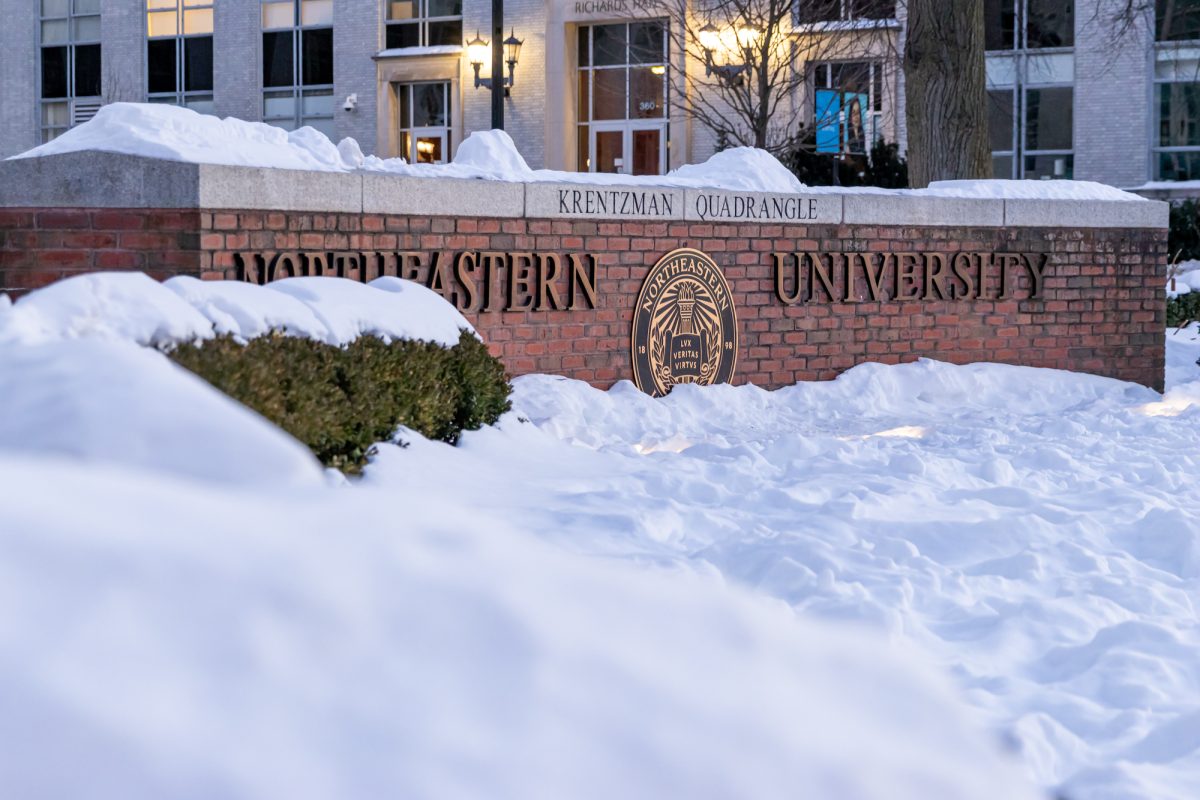
A preliminary list identified Northeastern as one of more than 30 universities with a “moderate to high risk” of losing military tuition assistance, according to reporting by CNN.
The Army compiled the list — which was obtained by CNN — for troops enrolling in law school. Secretary of Defense Pete Hegseth told military branches to “evaluate” graduate programs for active-duty members at universities that “diminish critical thinking” and have “significant adversary involvement,” a source familiar with the matter told CNN.
The move aligns with Hegseth’s effort to identify universities he claims are “biased” against the U.S. military and that sponsor “troublesome partnerships with foreign adversaries,” according to reporting by CNN.
Also among the universities listed in the “moderate to high risk” category are Boston University, Boston College and every Ivy League university except Dartmouth College. Potential ramifications are unclear due to Hegseth’s broad instructions in a Feb. 6 memo announcing it would end its academic relationship with Harvard.
“As of now, Northeastern has not received any formal notification from any branch of the federal government related to this issue. We are aware of press reports that reference Northeastern, but we cannot comment on this matter until we confirm the facts,” Vice President for Media Relations Renata Nyul wrote in a Feb. 17 statement to The Huntington News.
The memo’s broad language has created uncertainty among service members already admitted to the listed universities and those hoping to apply, according to CNN.
While it is unclear how much Northeastern receives from the federal tuition assistance program, a 2025 audit found it took in more than $33.4 million directly in grants and agreements with the Department of Defense.
Northeastern currently offers a scholarship to individuals on active duty, in a selected reserve, the Army National Guard or Air National Guard that matches the amount of tuition assistance each branch of the military provides, with a cap at $4,500 per fiscal year. Those receiving a reduced military tuition rate of $250 per semester hour are not eligible for the scholarship. The amount is paid to the school from the military on a per-class basis, according to Military.com.
A source familiar with Hegseth’s guidance told CNN that “graduate programs for highest performing officers and non-commissioned officers are almost certainly at risk.”
During the 2025 fiscal year, student fees and tuition accounted for 70.4% of Northeastern’s operating revenue after accounting for institutional financial aid. It is unclear how the potential loss of military tuition aid would affect the university, which is already adjusting to the loss of federal grants and preparing for indirect cost cuts. Across the nation, universities are trying to cut expenses to offset reductions in federal funding.
Most recently, Northeastern made discretionary funding cuts across several colleges, including 75% to 80% cuts in the College of Social Sciences and Humanities. The Huntington News also found that several departments had eliminated administrative staff positions.
Hegseth published a memo Feb. 6 announcing the Pentagon will sever its academic relationship with Harvard University starting in the 2026-27 school year, including discontinuing all graduate-level professional military education, fellowships and certificate programs for active-duty service members. Hegseth previously called Harvard the center of “hate-American activism.”
“In two weeks’ time, components of all of our departments — Army, Navy and Air Force — will evaluate all existing graduate programs for active duty service members at all Ivy League universities and other civilian universities,” Hegseth said in a Feb. 6 video posted on X.
The effort is the latest move by Hegseth as he aims to eliminate diversity, equity and inclusion ideology from the Department of Defense, recently informally renamed Department of War, including the dismissal of transgender troops and affirmative action.
“The goal is to determine whether or not [certain universities] actually deliver cost-effective strategic education for future senior leaders when compared to say public universities and our military graduate programs,” Hegseth said in the Feb. 6 video. “That no longer includes spending millions of dollars on expensive universities that actively undercut our missions and undercut our country.”