After a year-long intermission between parts one and two, audiences arrived with high expectations for “Wicked: For Good” — which inevitably led to the common remark about any sequel: “not as good as the first one.”
Anticipation led to a $150 million box office opening weekend. Funnily enough, “Wicked,” its arguably more popular predecessor, hit $114 million upon its debut. Based on its music and plot alone, the staged musical’s second half is traditionally characterized by a darker mood and intensity. The film adaptation adopts that same tone while introducing additional factors that may deter some viewers.
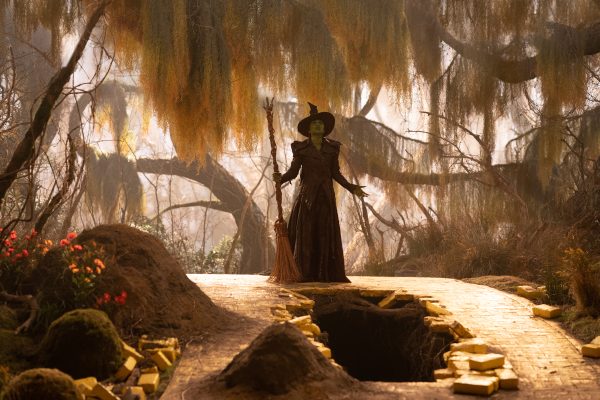
Translating a stage performance into film production offers both opportunities and hindrances. On screen, the set expands beyond the 100-foot confines of a theater stage, making its world seemingly limitless. The visual effects team filled every frame with spectacle, including massive banners cascading from the sky and fireworks punching beats within the music for extra emphasis. While occasionally excessive, these flourishes enhance Oz’s fantasied atmosphere and whimsy.
Yet, this cinematic grandiosity sometimes overshadows the actors’ performances, replacing the raw, emotional power of live theatre with produced sound effects and visual distractions. As stakes swell, so does the sound design, drawing attention to the banging of hands on a desk rather than the facial expressions of the actor. Instead of admiring the choreography, eyes are geared toward animated posters in the sky.
With a runtime of 2 hours and 18 minutes, the film doubles the stage musical’s approximately one-hour second act. This expansion allows for deeper character development and backstory, though it creates uneven pacing at times, leaving the audience wondering if a wand and broomstick fight or flashbacks to the witches’ childhoods were truly necessary for the plot.
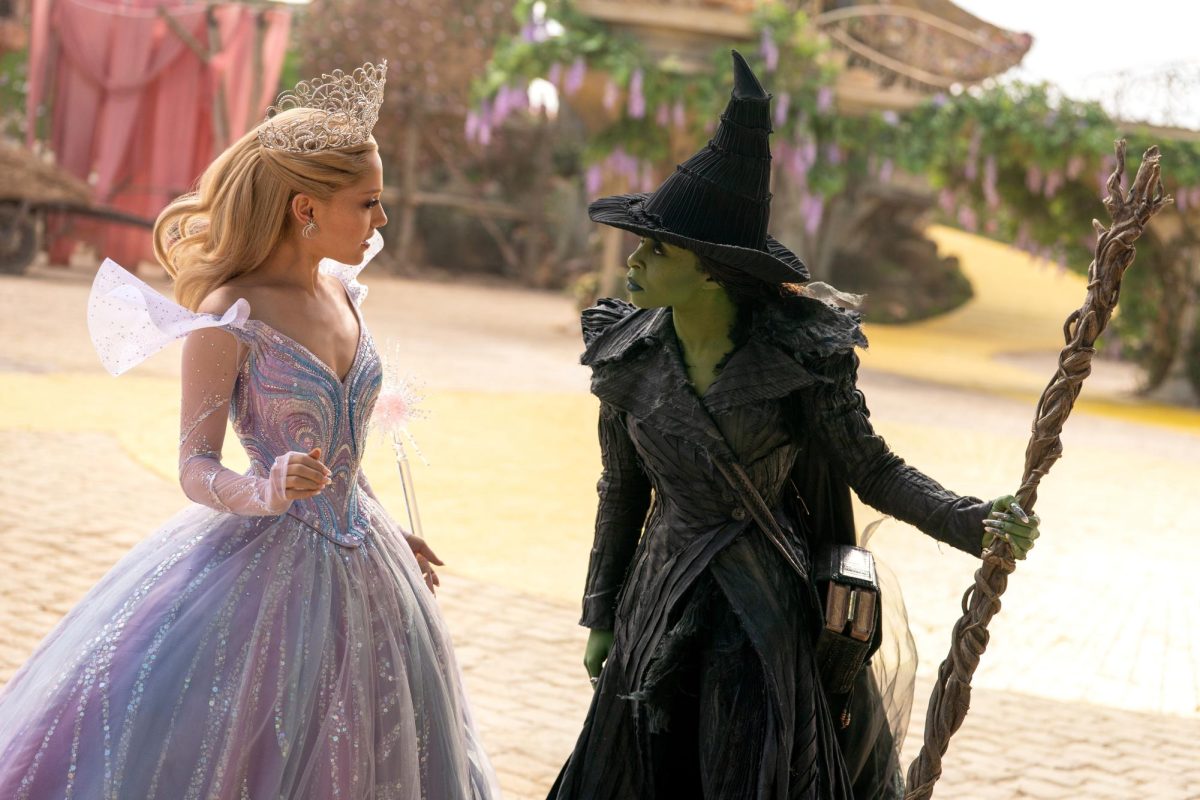
“Wicked: For Good” focuses on Glinda (Ariana Grande) more heavily than its stage counterpart, exploring her privileged upbringing and filtering much of the narrative through her perspective. Original composer and lyricist Stephen Schwartz contributed two new songs, including “The Girl in the Bubble.” This song, accented by Grande’s smooth vocals, explores Glinda’s internal processing about her sheltered existence and inevitable confrontation with reality as well as the resulting moral turmoil. Grande nuances every cheerful smile with subtext, demonstrating her ability to dive completely into Glinda’s charming and unexpectedly complex persona.
In the movie, there is a heightened importance placed on Elphaba’s (Cynthia Erivo) idealistic attitude. Sung by Erivo, Schwartz introduces us to the new song “No Place Like Home,” an allusion to the classic Wizard of Oz’s famous quote. In the 1939 film, Dorothy shouts the well-known expression with three clicks of her heels in hopes of getting back to where she belongs. Schwartz cleverly draws a parallel between Elphaba’s ostracization and commitment to authenticity. The extra song initially felt out of place, but Erivo’s commanding vocal execution made it work.
On the technical side, Paul Tazewell’s costume design and Frances Hannon’s makeup artistry proved exceptional, bringing remarkable depth to every character, particularly the Tin Man (Ethan Slater) and the Scarecrow (Jonathan Bailey). Their unsettlingly realistic appearances further immerse viewers into the story while maintaining an edge of discomfort that points to the sinister themes of the second act.
Viewers with the chance to see this film shouldn’t hesitate to say yes, but they won’t be missing a cinematic revelation if they wait for its home release, either. Grande and Erivo play a wonderful Glinda and Elphaba duo with their compelling acting and commitment. However, the movies combined do not need to be double the length of the staged musical, and the expansion starts to feel indulgent instead of necessary.
Ultimately, “Wicked: For Good” offers a mixed experience: It’s likely audiences will find aspects to fawn over and others that disappoint in equal measure. It’s a solid conclusion for fans of the first film, but it confirms a simpler and live version is sometimes better than an elaborate and produced one.