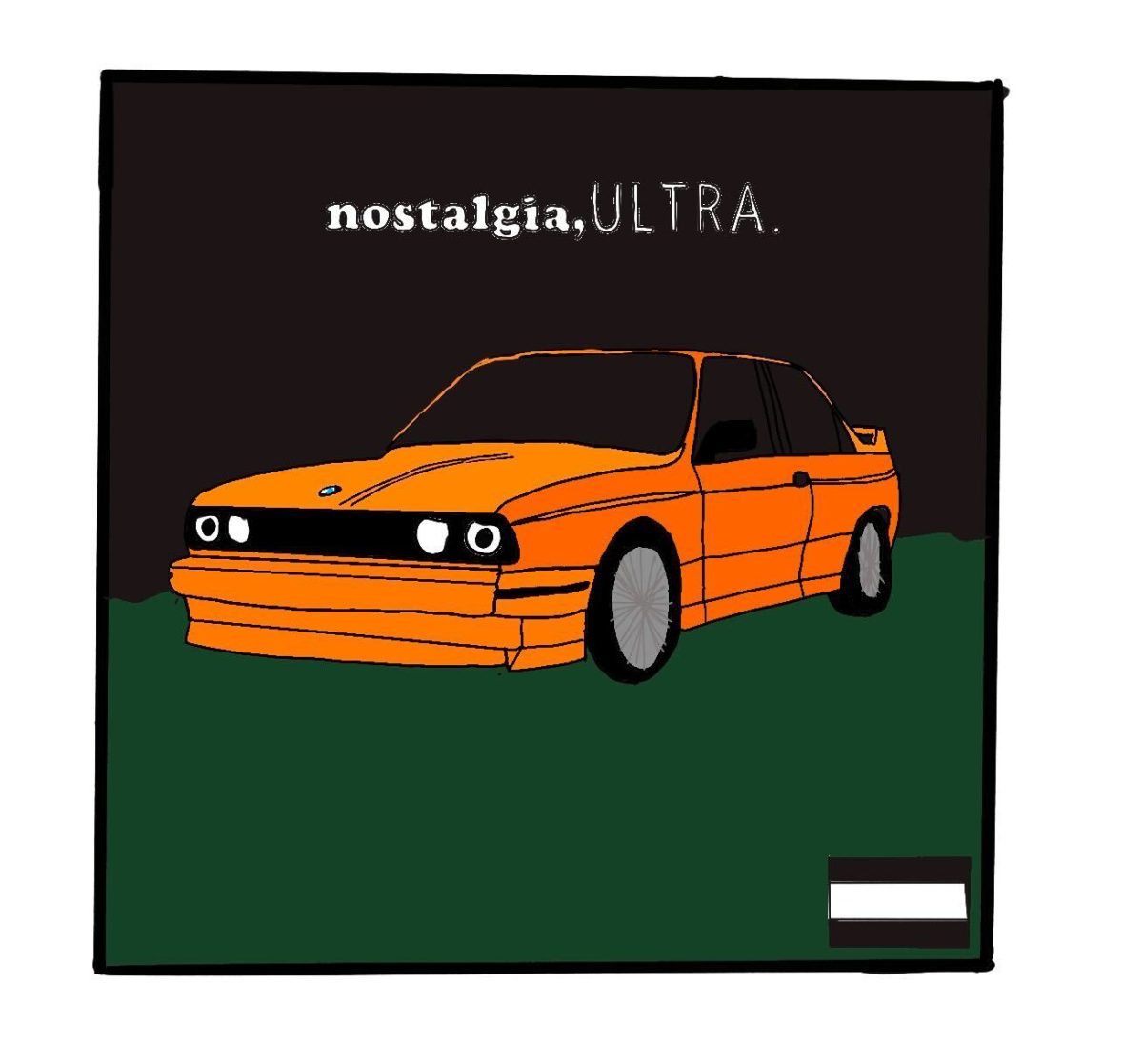
For an artist with only two official studio albums, Frank Ocean’s influence is unusually large, yet there is much more to his cultural impact than “Channel Orange” and “Blonde.” This influence began 15 years ago Monday with the release of his debut mixtape “Nostalgia, Ultra” on his Tumblr account.
Serving as Ocean’s initial step into stardom, “Nostalgia, Ultra” has since become a cult classic among fans for its genre-blurring twists on recognizable indie and rock hits, emotionally raw lyrics and do-it-yourself production. Despite all that has changed since 2011 and the fact that the project will likely never arrive on streaming services, the themes and impact of “Nostalgia, Ultra” remain as relevant as ever.
The creation and subsequent release of “Nostalgia, Ultra” came after Ocean (born Christopher Breaux) moved from his hometown of New Orleans to Los Angeles. Upon relocation, Ocean wrote songs for artists like Justin Bieber, John Legend and Brandy. His debut mixtape was inspired by the tragedy of Hurricane Katrina, which devastated the New Orleans area and caused his aforementioned relocation, and motivated by his partnership with hip-hop collective Odd Future.
From 2009 to 2011 Ocean remained one of the few members of Odd Future who had not yet released a project, with group standouts Tyler, the Creator and Earl Sweatshirt dropping their respective debut mixtapes in 2009 and 2010. After a feature on fellow member Domo Genesis’ “SteamRoller,” the hype train began, and fans of the collective hoped for a solo project from Ocean.
With the release of Ocean’s mixtape on Tumblr February 16th 2011 — which involved no promotion of any kind — critics and fans alike were introduced to his one-of-a-kind sound, and the project received positive reviews from major outlets like Pitchfork and Metacritic. While “Nostalgia, Ultra” has never made its way to Spotify or Apple Music due to uncleared samples, that has not stopped the project from influencing future artists and garnering attention through its themes and sound.
Central to “Nostalgia, Ultra” is its bold use of covering popular songs, an artistic choice that was also the ultimate cause of its copyright issues. The bookending tracks “Strawberry Swing” and “Nature Feels” use familiar indie samples from Coldplay and MGMT to layer Ocean’s R&B-driven lyrics. By grounding his own storytelling in familiar hits, Ocean eases listeners into his debut and evokes a sense of nostalgia that directly aligns with the project’s title.
Flawlessly imbuing a classic with a fresh perspective, the 12th track on the album, “American Wedding,” uses one of the most recognizable instrumentals of all time, the Eagles’ “Hotel California.” Notably, Ocean opts for more contemporary themes on the track, critiquing the laws and confines of marriage as well as the outdated practice of arranged marriages in religions like Islam. In using these well-known instrumentals as a vessel to deliver powerful modern sentiments, “Nostalgia, Ultra” is home to tracks that go beyond simple lyrics and enjoyable sounds, giving them staying power even in 2026.
Fifteen years later, another track that stands out thematically from the rest is “We All Try.” Beyond the chorus’ message, where Ocean gives his good-faith outlook that people have positive intentions, the first verse seems straight out of the modern day through the controversial topics he speaks on. Ocean first affirms his belief in God and religion, but then follows up by stating his support for gay marriage and abortion rights, topics that were hot-button issues in 2011 and still are under the current presidential administration. Additionally, this song arrived just over a year before Ocean came out, which he also announced on his Tumblr. The assertions on “We All Try” are shockingly relevant to modern society, imbuing the mixtape with further impact and significance.
Over the past decade, the production of “Nostalgia, Ultra” has greatly influenced the music industry. Considering it was Ocean’s first project, it makes sense that the mixtape has a less polished sound than his later work. However, this emboldened later artists to feel confident in their “lower quality” work early on. “Nostalgia, Ultra” has a do-it-yourself feel through its roughly mixed vocals and what some may call “lazy” sampling work. This mixtape is proof that early projects do not need to sound like the mainstream hits on the radio to succeed.
The mixtape laid a foundation for the bedroom pop phenomenon that emerged in the mid to late 2010s, with artists like Clairo, Rex Orange County and Beabadoobee finding success experimenting with lo-fi sounds and relaxed production. Additionally, the DIY nature of “Nostalgia, Ultra” is speculated to have influenced artists like Steve Lacy, who got his start recording and producing music on his iPhone. In that sense, “Nostalgia, Ultra” helped normalize imperfection, proving that originality and strong performance could outweigh studio polish. Fifteen years later, the rougher edges of the project feel less like limitations and more like a blueprint.
Ultimately, “Nostalgia, Ultra” endures not because of commercial success or streaming numbers, but because of what it represents. It captures an artist at the beginning of his evolution — unpolished, experimental and unafraid to use his own unique sound to convey controversial but important lyrics. What began as a silent Tumblr upload has influenced a generation and defined the first chapter of Frank Ocean’s career. This is where the beauty of “Nostalgia, Ultra” lies: a mixtape built on longing for the past that continues to feel present.