

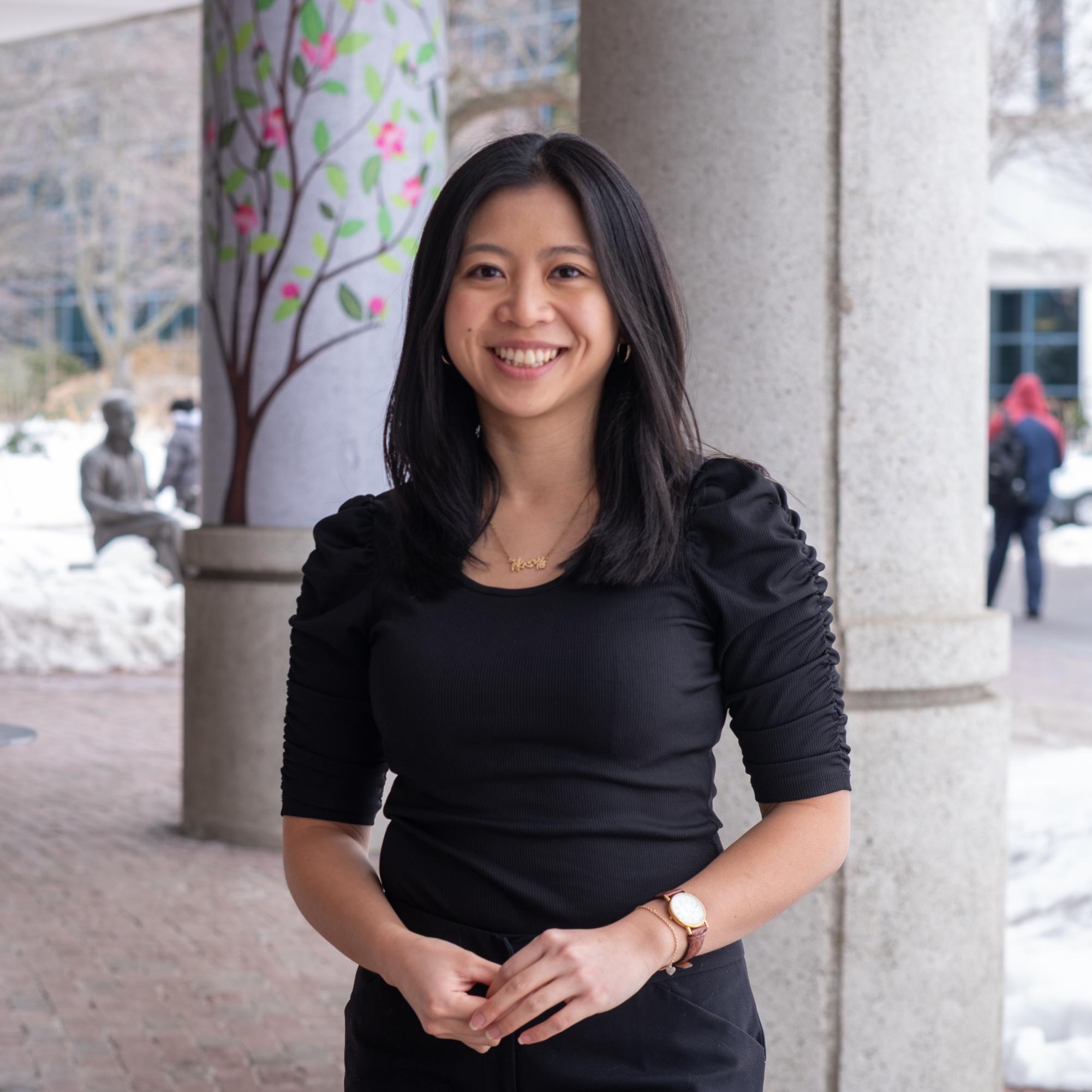
When Kelly Chan started at Northeastern in the fall of 2019, life was normal. Students packed into classrooms during the day and attended house parties at night.
But when COVID-19 hit in March 2020, everything changed. Classrooms emptied and faces were hidden behind masks as the world grappled with the pandemic. Chan, a Class of 2023 journalism major, remembers a night shortly before she went home to New Jersey, running through the empty Boston campus with her friends, in awe of the barren walkways.
That semester, Chan was deputy editor for the lifestyle section of The Huntington News. By April, when semesterly editorial board elections rolled around, she had her eyes on the highest position in the newsroom: editor-in-chief.
“I had a lot of audacity, for some reason, to want to run for it,” she said. Chan won the role of editor-in-chief, stepping into the position at the end of her first year at Northeastern.
“There comes a lot of learning experiences along the way, because I didn’t know everything going into [being editor-in-chief],” she said, laughing. “And I wasn’t going to lie and say that I did know everything, but I definitely thought that I could lead well, and I thought that I had a good vision for what I wanted to see more of in the newspaper.”
Among the challenges during Chan’s editorship, she said, was running a virtual newsroom. That fall, The News saw an influx of writers, as the work could be done remotely. Despite being physically separated, Chan saw The News as a space for students who wanted to band together.
“Who wants to be in a Zoom room where you don’t know anyone?” she said. “And so that was really difficult. But we made do with what we had, and what we had was a Zoom room, and what we needed to get done was get the layout to the printers.” The News continued to produce and distribute print papers in the fall 2020 semester.
When Chan became editor-in-chief, universities had to make tough decisions about how to teach students in the throes of a global pandemic. Part of the responsibility she felt as editor, Chan said, was to get answers from Northeastern’s senior leadership about how the university would function, as well as how it would approach anti-racism policies and initiatives.
Chan spent the summer vying for an interview with Northeastern President Joseph E. Aoun, and on her 19th birthday in August, she got the green light. The News produced two Q&As from a one-hour interview with Aoun, with one focusing on reopening the shuttered Boston campus and the other on anti-racism and diversity goals.
Aoun also authored several letters to the Northeastern community in 2020 and 2021 about COVID and how the university would respond to the nation’s decrying racial injustice. In August 2020, Aoun penned an opinion piece in The Washington Post titled, “The virus isn’t going away. That’s why campuses need to reopen.”
“I think what we were hearing the most from students was that they just wanted to hear from our leader about what was going on, and there was gonna be so many changes at Northeastern,” Chan said.
Days before the fall 2020 semester began, the university was embroiled in controversy when it dismissed 11 students who were caught gathering in the Westin Hotel, which was previously used as a residence hall. The incident, dubbed by the media as the “Westin 11,” gained national attention and became one example of how universities would handle disciplining students for congregating during the pandemic.
The night after she published the article reporting on the dismissals, Chan recalls intentionally putting aside her laptop to de-stress. Around 10 p.m., she opened her laptop to find two emails, one from CNN and one from the Today show. By that point, the Today show segment had passed, but CNN slotted her in for the following afternoon to discuss the Westin 11 and how Northeastern was enforcing its COVID-19 policies.
As Chan juggled leading a virtual newsroom and diligently covering COVID-19, her editorship was largely marked by the societal reckoning with police brutality and systemic racial oppression. The nationwide howls of protest reached college campuses, prompting universities to revise or pen entirely new anti-racism plans.
Chan said she put The News’ coverage under a microscope, asking herself and her editors of their work, “Are there voices that are missing?” She conducted diversity trainings within the newsroom and kept up with how major outlets went about covering hot-button issues. For instance, she pointed out, the Associated Press Stylebook, the golden standard of journalistic writing, revised its guidelines to capitalize “Black” when referring to the race of people in June 2020, among other changes.
After she ended her semester-long term as editor-in-chief, she took on the role of editor-at-large, a position that acts as an adviser to the senior editors of The News. But the news climate and society alike were still in upheaval. That March, a gunman killed eight employees in an Atlanta spa, targeting Asian employees. The killings sparked the “Stop Asian Hate” movement and came amid a wave of anti-Asian racism brought on by COVID-19.
Days after the shooting, Chan received a text from a friend stating Asian American leaders at Northeastern would be releasing a letter calling on the university “for greater funding, resources, transparency and other measures to address issues faced by the Asian American community.” That night, she stayed up until 4 a.m., frontloading some of the research. In the following three days before publishing the 2,073-word article, she conducted interview after interview and verified the letter signatories’ complaints. (The letter garnered more than 1,250 signatures from Northeastern community members.)
“As an Asian American on campus, and [knowing] the other people in my community are not feeling heard or not feeling represented, I wanted to make sure that I did it justice,” she said.
The outcry from Asian American leaders came after what they perceived as an insufficient response from Northeastern administration about anti-Asian racism, notably the Atlanta spa shootings, sources told Chan. She said she understood their anger.
“Especially in college, you want to belong. That’s a big part of being in college in general,” she said. “And a lot of what they were telling me was they just don’t feel heard.”
During that time, Chan said more people likely felt emboldened to speak up about festering racial injustice. “I think that was probably a good thread during that time, people feeling like they wanted to speak up more, and I wanted to be there for them when they wanted to speak,” she said.
After serving as editor-at-large for a semester, she stayed on as news staff until graduating and going on to earn her master’s in media innovation from Northeastern in 2024. Outside of The News, she did co-ops at the Massachusetts Institute of Technology’s Solve and Nicole Chan Photography, where she ultimately found her stride in multimedia. She now works as a content producer for Boston.com, designing multimedia projects and newsletters.
But, Chan said, many of her formative experiences in journalism came from long hours spent on Zoom meetings.
“Student journalists are doing real quality journalism that I think is really important to the community,” she said.