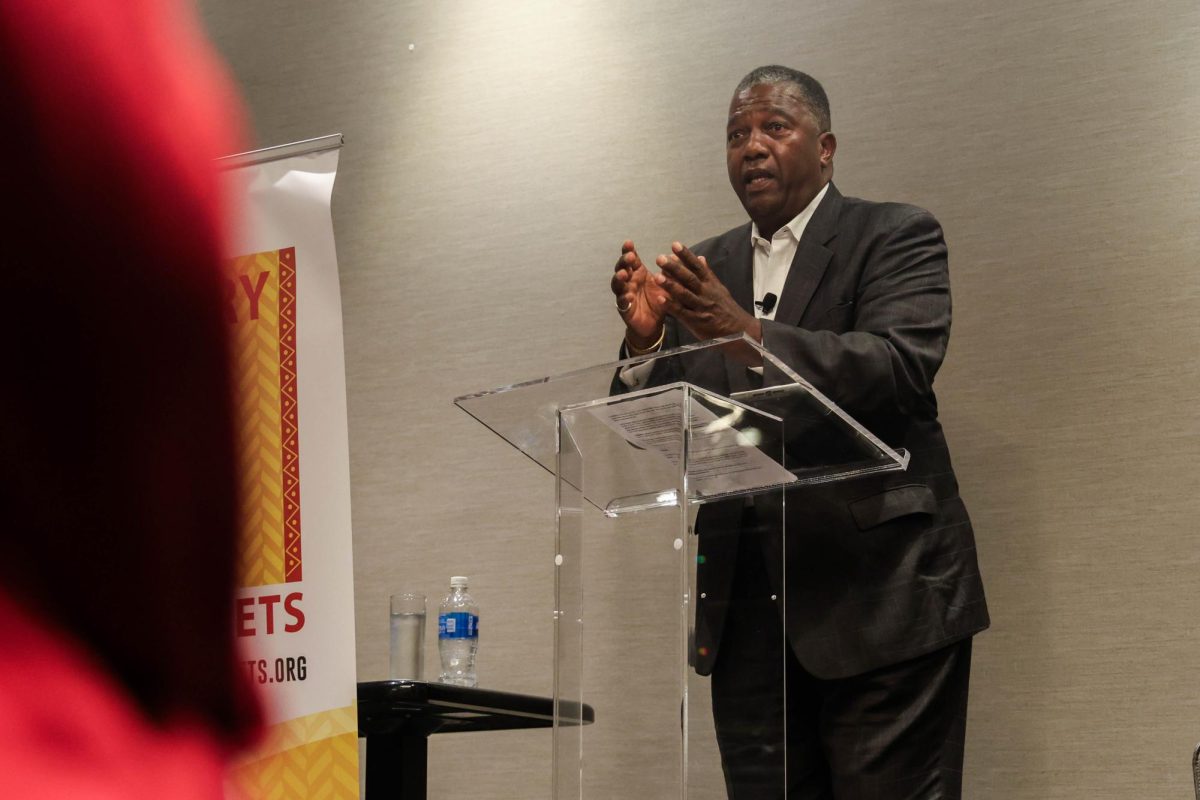
More than 90 health care professionals, policymakers, educators, business leaders and journalists congregated at the Citizens House of Blues Boston for the two-day Globe Summit 2025 from Nov. 18 to 19.
Now in its fifth year, The Boston Globe’s Globe Summit convened researchers, entrepreneurs, students, executives and public officials from across New England to explore this year’s theme, “Revolutionary Ideas.” The event was split into four sections that focused on the Summit’s mission: healthcare; leadership and impact; innovation and transformation; and community and commerce. The event brought “together leaders and innovators to ignite collaboration, inspire ideas, and shape the future of our industries and communities”, according to the Globe Summit website.
The “IVF and Inequality: Barriers and Solutions” conversation on Nov. 18 explored the limitations of in vitro fertilization, or IVF — a $15,000 to $30,000 procedure, according to Forbes, where eggs are removed from an ovary to be fertilized and returned to the uterus three to five days later — and the ways in the procedure can become more accessible.
Massachusetts State Senator Julian Cyr discussed lowering the barriers for IVF for families across Boston, including increasing insurance coverage for IVF and closing loopholes in the definition of infertility in Massachusetts law. Cyr said that in Massachusetts, if a heterosexual couple with commercial insurance tries to get pregnant for six months with no success, the couple is considered infertile and is eligible for insurance coverage for fertility treatments. However, Cyr described how all cases of “infertility” are not covered the same.
“If you’re infertile, not for a medical condition, but [the] social or … fabric of the family you’re building, the coverage is not there,” Cyr said.
Cyr also touched upon his personal experience with the IVF process.
“I have some funny stories from going to the California Cryobank [in Cambridge],” he said. “… I think what was stunning to me was just that it almost felt like I was the first gay man who had walked through the door to be a known sperm donor.”
Cyr spoke about the difficulty health care providers had navigating his health history, opening a larger conversation about cultural competency in health care.

“The definition of infertility is very broad,” he said. Cyr introduced a bill that would specify what infertility means and closes loopholes, with one goal of expanding coverage for LGBTQ+ family building. Another part of the bill includes enhancing healthcare professionals ability to handle special cases of infertility, including LGBTQ+ families.
“The cultural competency piece is another piece of the bill that [would say], if you’re in the reproductive or infertility [sector], you have to have some level of cultural competency training,” Cyr said in an interview with The Huntington News.
During the panel “Identity and Power: Who Gets to be an American?” three academics and civil rights advocates, along with the Globe’s immigration reporter Giulia McDonnell Nieto del Rio, discussed the imbalances of equality, race and power in the current political climate and the seemingly fluid definition of an “American.” The discussion hit home for attendee Helen Li, who resonated with the conversation as an Asian-American woman living in Boston.
“Hopefully with something like [the Globe Summit], more awareness will be made and more policymakers will be culturally competent towards what is happening [with racial discrimination], instead of asking people not to rock the boat,” Li said in an interview with The News. “Real stories are powerful.”
Day two opened with one of the Summit’s most popular sessions, an “Innovation and Transformation” keynote featuring Ben & Jerry’s co-founder Ben Cohen. The event was recorded live for The Globe’s Say More podcast.
Cohen reflected on the company’s long history of using ice cream as a vehicle for activism — from the 2024 “Churn Out the Vote” initiative to a watermelon-flavored sorbet he later developed to express support for peace in Palestine. That flavor never made it to shelves after being rejected by Unilever, which owns Ben & Jerry’s, highlighting what Cohen described as the limits placed on corporate advocacy.
Cohen said the growing conflict between Ben & Jerry’s and Unilever ultimately pushed co-founder Jerry Greenfield to resign in 2025. Cohen described Greenfield’s departure as “tearing him apart.” Cohen chose to remain with the company, but the differences in how each approached the tension marked a turning point in Ben & Jerry’s long-held commitment to its social mission. Since Greenfield’s departure, Cohen has continued campaigning to revive the watermelon flavor through his ongoing “Free Ben & Jerry’s” effort.
The last of the four sessions of the Globe Summit, “Community and Commerce,” opened with a fireside chat featuring Ben Collins, CEO of The Onion and Emerson College alumnus. Collins addressed the university’s decision to bring Boston police onto campus during pro-Palestine demonstrations in April 2024. An encampment was raided by police and 118 arrests occurred with what was reported as violent police tactics, emphasizing the importance of communication over escalation.

“If they try to beat you with sticks for protesting Palestine in an alley, just [expletive] fight back next time,” Collins said, turning to a group of Emerson students in the audience who had identified themselves. “Keep it up, keep fighting.”
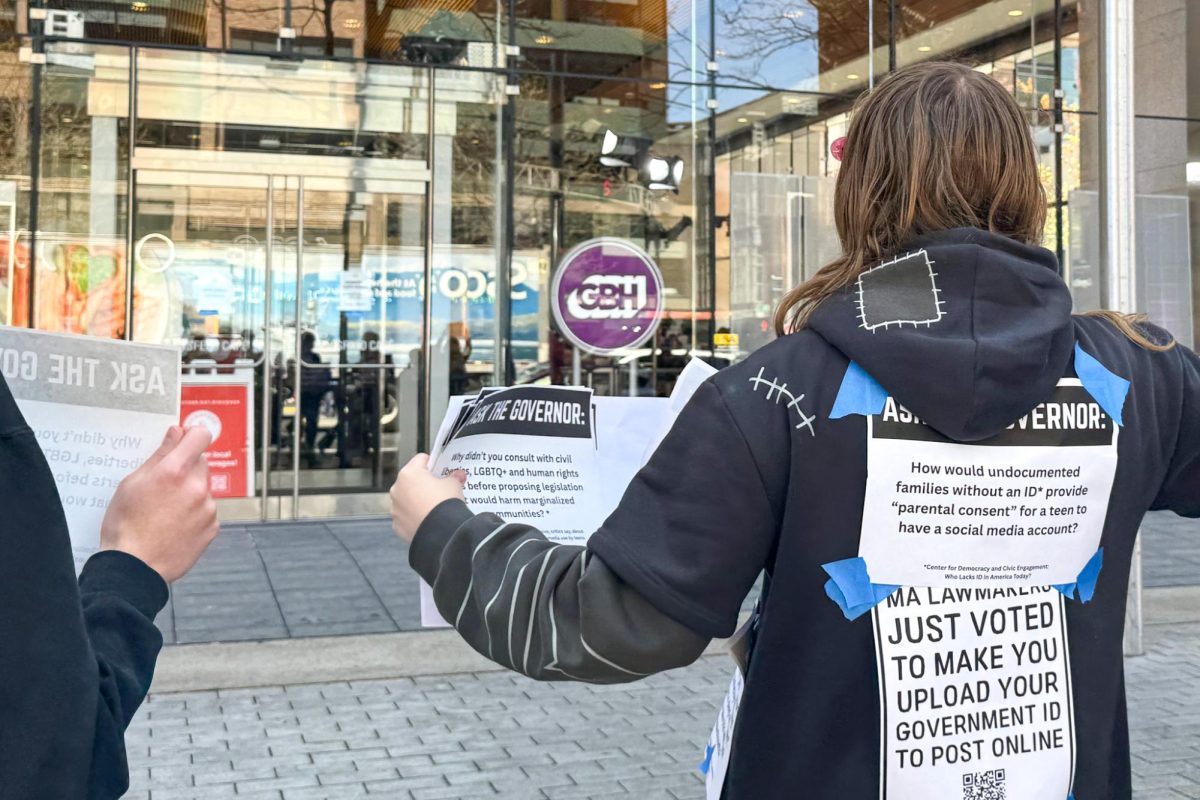
The Summit ended on a reflective note as Governor Maura Healey joined Allison Feaster, the Boston Celtics’ vice president of Team Operations and Organizational Growth and a former WNBA All-Star, for its final conversation. Feaster
Feaster, who also works on social justice initiatives through Boston Celtics United and serves in governance roles with the NCAA and the New Commonwealth Fund, drew on her career in professional basketball to talk about leadership as something built through community. Healey expanded on that message with a call for collective responsibility, urging attendees to “continue to take action, be bold, lean on each other, [and] believe in one another.”
She reminded the room that Massachusetts’ story has always been shaped by ordinary people pushing for extraordinary change, encouraging everyone to “remember the struggles, remember the movements.”