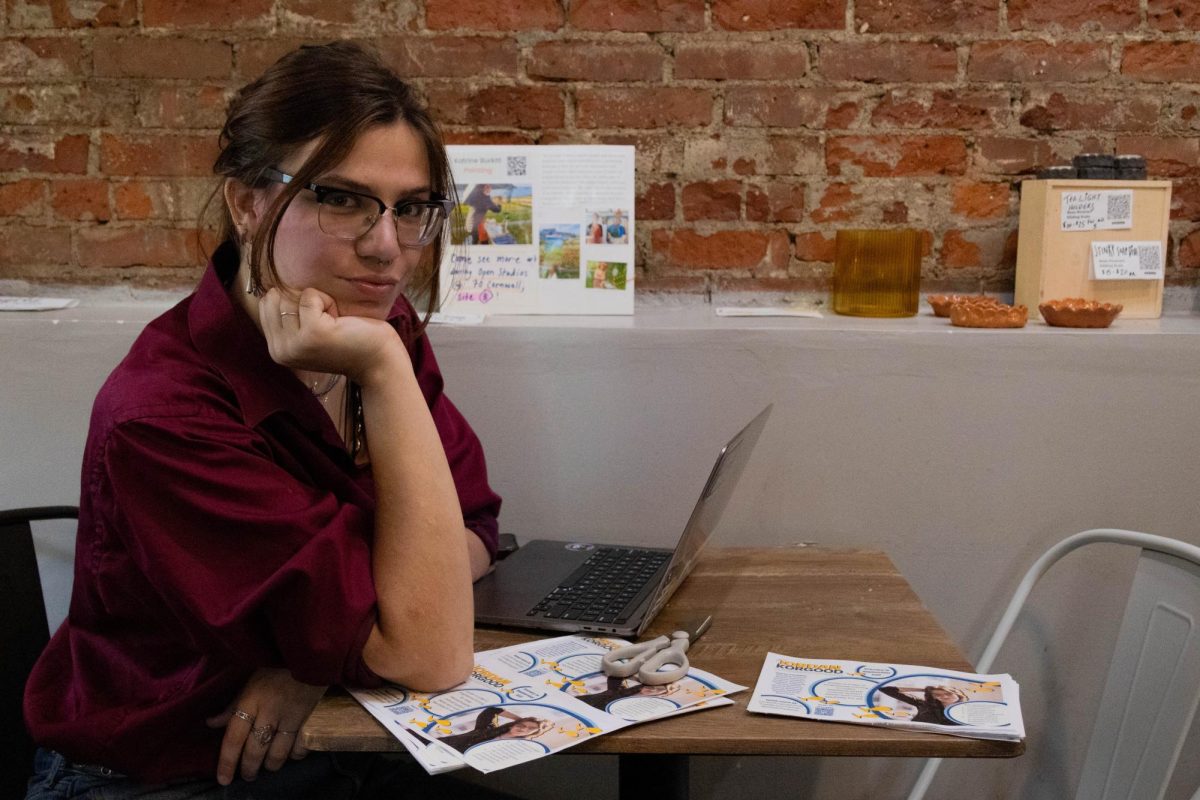
Carly Hopkins, a rising third-year biology major, sits with two peers at a small corner table in Oakleaf Cakes Bake Shop on Westland Avenue. They each sip lattes and share biology notes in preparation for their exam, while across the shop, employees frost fresh cupcakes and slide still-steaming croissants into the counters’ glass display case.
Cafe culture, like Hopkins and her peers engage in, is a time-honored tradition. A similar scene could be found nearly 300 years earlier at Le Procope in Paris, the oldest cafe in the city where philosophers Voltaire, Denis Diderot and Jean-Jacques Rousseau often gathered to share scientific theories and Enlightenment ideas.
“When I want caffeine or fuel, I’ll go anywhere. When I want something intellectual and somewhere to be present, I choose Oakleaf,” Hopkins said.
Originally founded in 2008 by Amanda Oakleaf and since bought and run by Julie Lyon and Mike Wellen, the cafe’s original mission remains the same: to create an environment where “individuals from all backgrounds can gather and connect,” according to Oakleaf’s website.
Cafes have long served as places to circulate ideas, build communities and forge bonds, yet these third spaces are increasingly threatened by corporate chain takeovers of local cafes.”
The neighborhood favorite has cultivated a sense of community, reminding Bostonians why sociable third places are essential. A term created by sociologist Ray Oldenburg, third places describe areas outside of one’s home and workplace (the first and second places, respectively) where people can converse and connect with others in the community.
Oakleaf’s ability to reach others has not gone unnoticed, especially among those who grew up with a strong coffeehouse culture, like Max Rosam, a rising third-year business administration and health science major at Northeastern.
“I think the coffee is just kind of a byproduct of the whole experience of dining and drinking coffee at a coffee shop,” Rosam said, adding that local cafes like Oakleaf have a “distinguished, authentic atmosphere that large chains such as Starbucks fail to replicate.”
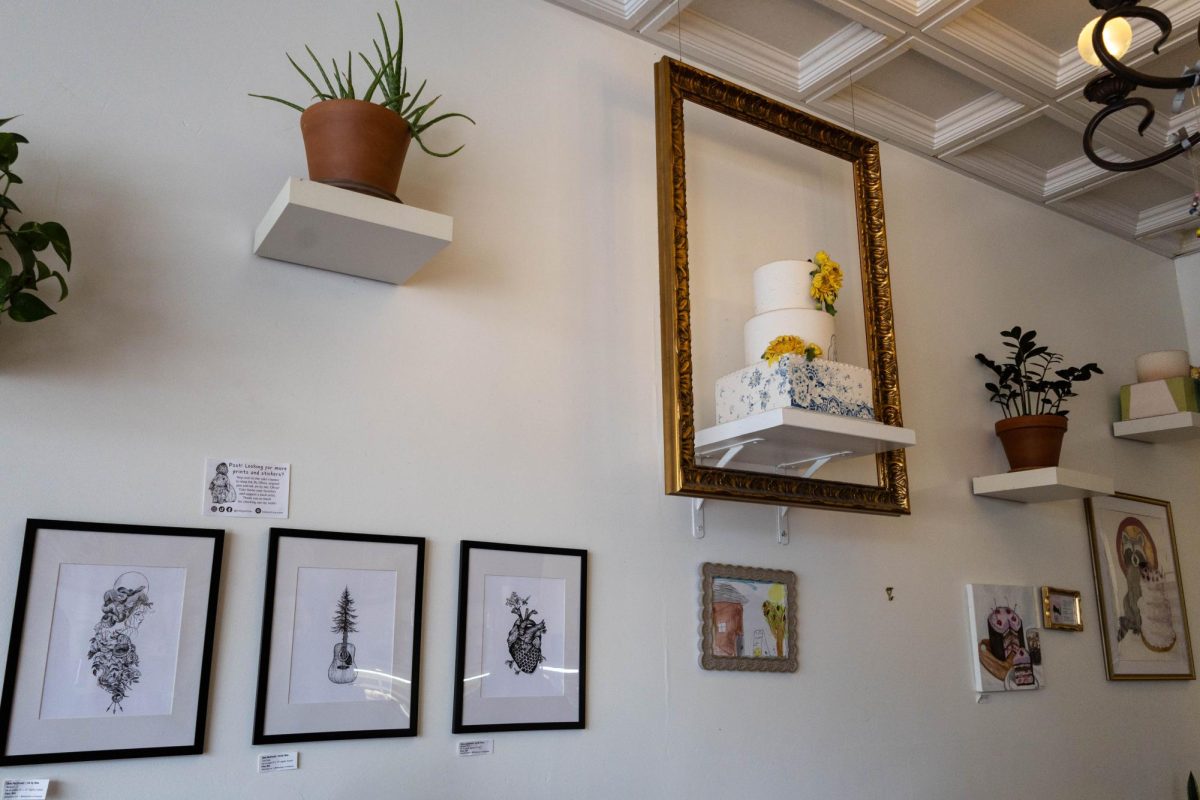
Inside, customers are met with walls covered in colorful paintings for sale by local artists. At the register, a box of handmade pins with sassy one-liners, including “Sue Me!” are sold for $1 each. A short bookshelf holds a tightly packed collection of novels alongside a full, paper reading list, with colorful pens enticing onlookers to jot down their current read.
Nonchalance finds no home in Oakleaf, and its absence draws customers — especially students.
“When I finish class, I would like to go to a locally-owned, small, boutique coffee spot,” said Chase Janes, a rising third-year politics, philosophy, and economics major at Northeastern. “This really makes me reflect on a larger issue that’s here in Boston: the fact that there’s not smaller, more locally owned coffee shops in the area. Unfortunately, the city is saturated with too many large corporations.”
Chain competition is one of the most prevalent challenges facing independent coffee shops. Up to 62% of small businesses nationwide fail within their first five years according to industry data cited by Coffee Intelligence. This reality is shaped by large corporations posing massive contest due to greater resources and a wider customer outreach. For Oakleaf, their best defense has been storytelling and community: two things chain companies cannot replicate.
“I think people come here instead of a chain because I think they can see — or I hope they can see — that all of the employees that work here are genuinely passionate about Oakleaf as a business and the way Oakleaf fosters community,” said Michelle Raiole, who has worked as a barista at Oakleaf for three years. “There’s definitely a lot of regulars that are special.”
The cafe posts playful content daily on Instagram, keeping customers engaged online. Collaborations with local foundations, including an active fundraiser with rabbit sanctuary Save The Buns, reinforce their investment in the local community. In 2024, Oakleaf honored Boston Symphony Orchestra’s music director Andris Nelsons on his 40th birthday by creating a cake replicating features from the Beethoven plaque and organ pipes at Symphony Hall.
“I choose Oakleaf over something like Caffè Nero, for example, because I appreciate the homey feel and authentic coffee experience,” Janes said.
For Oakleaf, community is not just a business strategy, but the product, and is what Rosam describes as “a place where different cultures come together and connect in a truly meaningful way.”