Reporting on politics in Washington is notoriously difficult — and the second Trump administration has proved incomparable.
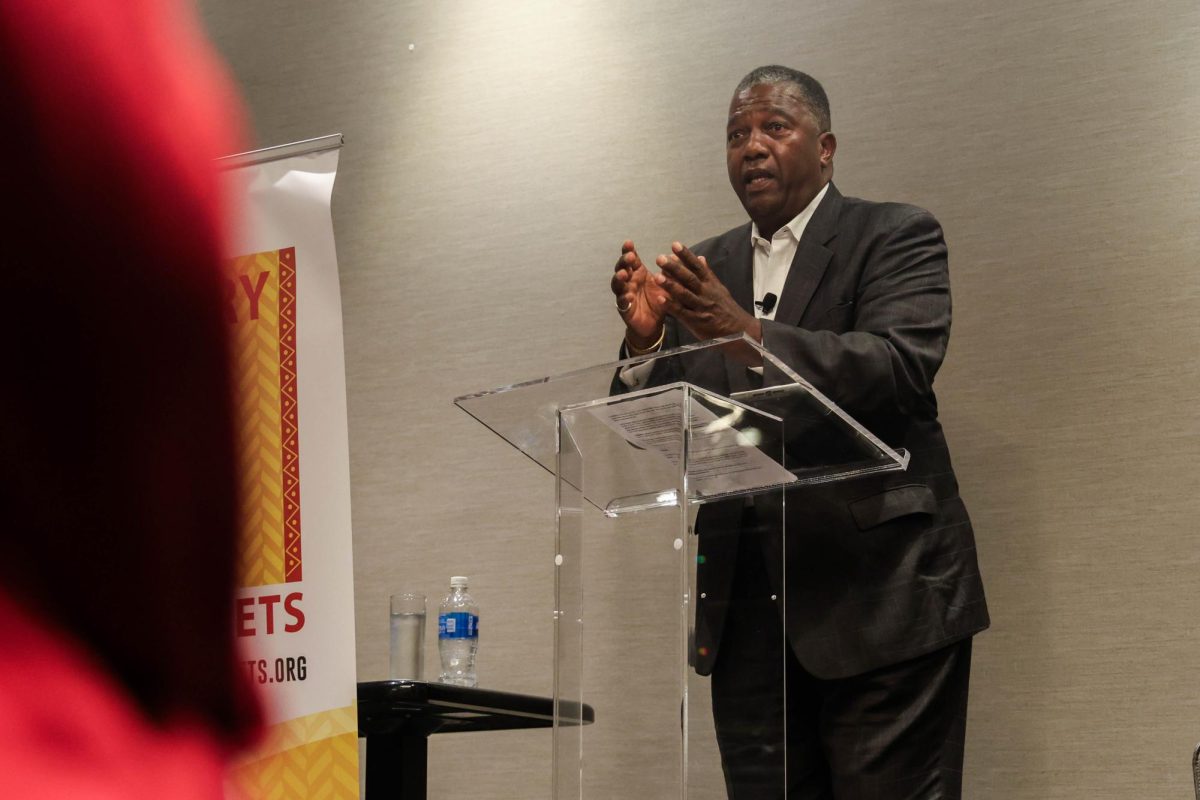
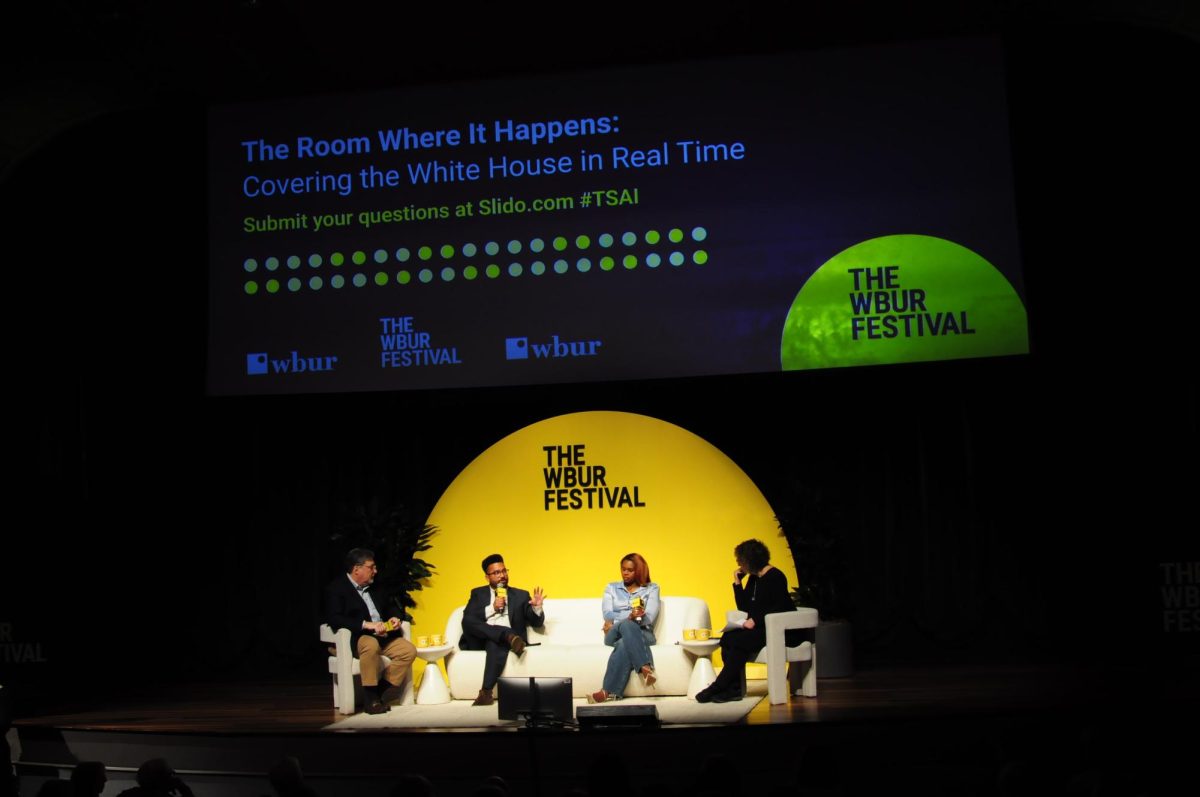
At the second-annual WBUR Festival, hosted on Boston University’s campus, journalists and professionals from around the nation gathered May 29 and 30 to hone their craft. On the second day of the festival, three White House correspondents took the stage to offer an inside look at what it takes to cover President Donald Trump.
Moderated by Lisa Mullins, host of WBUR’s All Things Considered, the panel featured Zolan Kanno-Youngs of The New York Times, Jasmine Wright of NOTUS and Tom Nichols of The Atlantic.
“I just wonder if you’re a little nervous because you know that on a Saturday morning, whether it be 3 a.m. or 10 a.m., that something is going to be happening and coming out through Truth Social,” Mullins asked the panelists.
Throughout his second presidency, Trump has taken to his social media platform Truth Social to spread false information, criticize his opponents, and spew messages of hatred.
“We kind of have a rule on the team that you need to be able to jump in and cover anything and everything,” said Kanno-Youngs, who joined The Times in 2019.
After initially discussing the panelists’ unconventional work schedules, Mullins probed the issue of gathering and verifying information from federal agencies. Wright, the former CNN reporter who now covers the White House for NOTUS, explained the contrast between the current administration’s structure and that of Trump’s first term in office.
“It is not like the first term, in which there were more career-type politicians running every part of the government and telling him what he could or could not do,” Wright said. “[Now,] each agency has a small group of people who actually know what’s happening within the agency, and then some of those people who know what’s happening in their agency might not know what’s happening in the White House.”
Nichols, who writes political columns for The Atlantic, emphasized how difficult it is for reporters to get information.
“I wouldn’t be able to do what I do if it weren’t for people getting the facts,” Nichols said, crediting the work of Wright and Kanno-Youngs.
Recently, Nichols’ pieces have covered the war in Iran and Trump’s 250th State Fair. Mullins commented specifically on Nichols’ use of expletives in his writing to describe politicians, asking if it has posed safety threats.
“I’ve been getting death threats for ten years — the minute I started writing about Donald Trump,” Nichols said. “Donald Trump has normalized the threat of violence in our public life.”
Wright and Kanno-Youngs both touched on their own personal experiences with the president’s harassment of the press.
“I just think the job is to keep asking the question. I don’t think the public gets much if it becomes a press versus Donald Trump dynamic. I am not there to sort of argue on behalf of our subscribers of whether or not he knows me, I am just there to ask the question,” said Kanno-Youngs, who was among four Times reporters who were granted an exclusive interview with Trump in January of this year.
Wright experienced a similar situation when she questioned him directly for NOTUS at a press conference in April about the unclear timeline of the war in Iran.
“It was clear that he was tired of receiving the same question for the fourth time … and he says ‘You’re such a disgrace,’ and he starts talking, and I just go, ‘Mr. President, I understand, but my question is x, y and z,” Wright said.
“I am not his opposition. I think the administration likes to frame the press as opposition. That’s not what we’re there for. We’re there to get answers,” Wright said. “And so I continued with my question, and he actually answered the question.”
Toward the end of the discussions, Mullins asked about the presence of social media influencers in newsrooms and press conferences, which has sparked debate in the industry.
“I think fundamentally journalism is a trade,” Wright said. “I don’t think you have to go to school for it. I think if you come into the Oval Office or the briefing room, no matter what your background is, and you’re trying to get real information, then you should be welcomed in there.”
Throughout the panel, all three guests stressed the changing landscape of political journalism and the importance of remaining professional through it all.
“Reporting wins,” Kanno-Youngs said. “Doing the work, going out and actually finding facts and truth and presenting that, that’s what breaks through.”