Last fall, Northeastern University and the City of Boston announced they would enter two new agreements, increasing Northeastern’s annual payments to the city by 36.8% — a commitment experts say requires long-term accountability and community engagement by the university.
The city announced the new agreements — a 5-year-long payment in lieu of taxes, or PILOT, program and 10-year institutional master plan, or IMP — Nov. 13. The payments for the PILOT program are slated to start in Fiscal Year 2026, while the IMP proposals have their own development schedules.
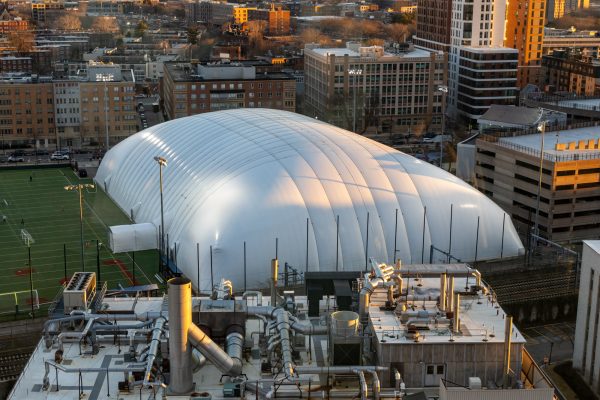
Over the next decade, the IMP obligates Northeastern to pay approximately $62.5 million in community benefits, including investments in affordable housing, funding for the planning and beautification of Nubian Square and expanded public access to Northeastern facilities such as Carter Playground and the field bubble. With the PILOT agreement, Northeastern separately pledged more than $49 million in cash and additional benefits to the city over five years.
The IMP, which includes plans for the next 10 years, outlines specific obligations the university must meet and is determined by negotiations between city and university officials.
Previous IMP editions laid the path for Northeastern’s rapid urban growth: specifically, a 73% increase in real estate holdings in Boston over the past 25 years. These included the construction of Snell Library, Curry Student Center, Marino Recreation Center, the Interdisciplinary Science and Engineering Complex and EXP. Notably, Northeastern’s expansion into Roxbury has raised concerns of gentrification and housing displacement from local residents.
During general payment negotiations last fall, the city requested Northeastern pay the city $10 million annually — an increase from previous payments of $1.9 million — because of its expansion, The Boston Globe reported. While the $2.6 million in cash annually and $37 million in community benefits by 2030 Northeastern pledged under the new PILOT agreement add up to well below the original $10 million ask, it’s still a 40% increase from previous payments.
“Boston thrives when our leading institutions match their global reach with a deep commitment to our neighborhoods,” Boston Mayor Michelle Wu said in a statement included in the November announcement. “Our five-year PILOT agreement sets a new standard for higher annual cash payments and community benefits at a time when Boston taxpayers need relief.”

The PILOT program, formalized in 2009, asks tax-exempt institutions to make voluntary payments to offset lost property tax revenue for the city. Northeastern has been part of the program since its launch in 2012.
However, many of the city’s largest tax-exempt institutions pay well below the amount requested in the program’s guidelines. In the 2024 fiscal year, Boston received only 76% of the combined cash and community benefit totals requested. Tax-exempt institutions such as the Boston Symphony Orchestra and Boston Architectural College met 100% of their PILOT obligations, while larger institutions such as Harvard University, Boston University and Boston College paid far less.
Northeastern University’s contributions sat at around 67% of the amount requested by the PILOT program during Fiscal Year 2024.
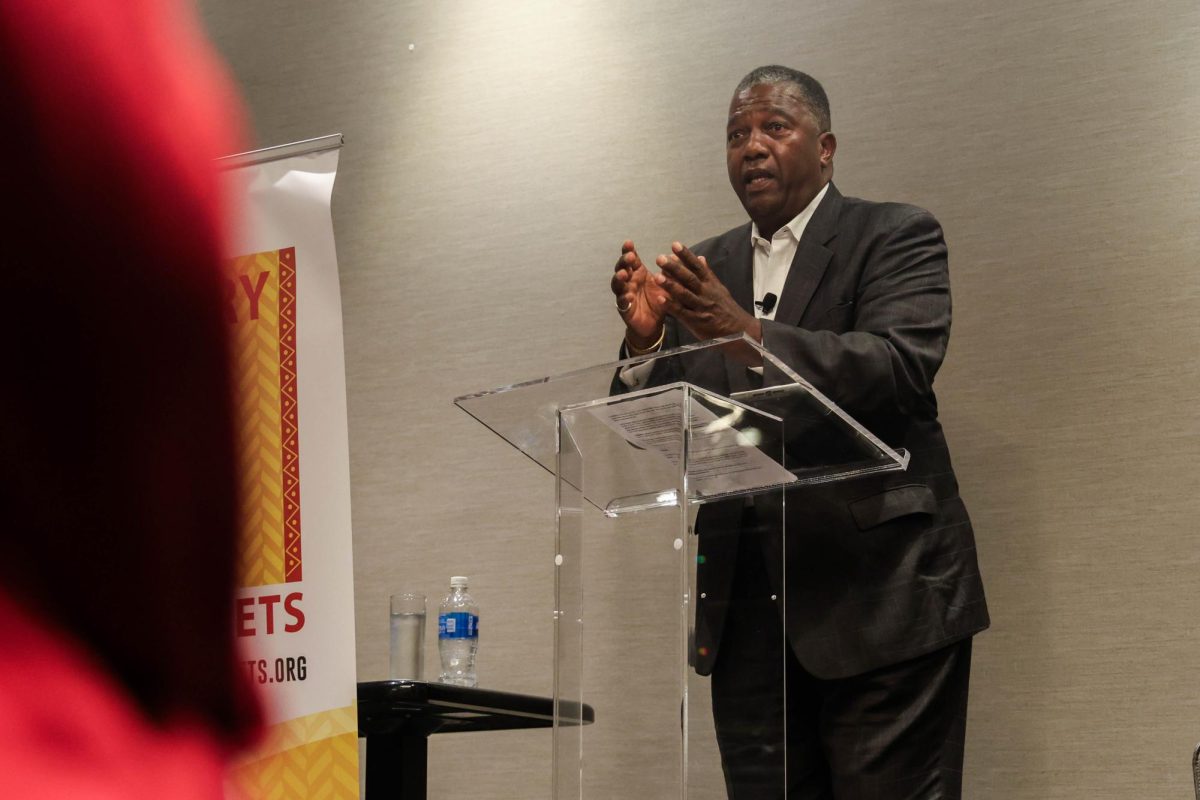
“It’s a wise move for Northeastern and any institution to commit money up front, knowing that if we did it annually, the cost would probably rise,” said Kimberly Lucas, Northeastern professor of the practice in public policy and economic justice who previously served as the director of civic research for the city, referring to inflation. “[This way,] we’re not paying as much as we should be or would want to commit annually.”
As part of the IMP, Northeastern plans to build new on-campus student housing, including a large residence hall at 840 Columbus Ave., to increase on-campus beds by a required 1,000. The Columbus Avenue project will add 800 new beds, which the university hopes will encourage students to live on campus, according to the university’s website. With this expansion, the university estimates that 69% of undergraduate students will be able to live on campus.
For the past several years, Northeastern has grappled with a growing student population. Many students move off campus due to a lack of on-campus housing, reducing the available housing supply for the city’s long-term residents in surrounding neighborhoods.
“Northeastern has a lot of resources, and there’s a lot of local people who live nearby who would like to take advantage of them,” said Armani White, the executive director of Reclaim Roxbury, a community-based nonprofit coalition focused on anti-displacement and housing justice. “Northeastern is required — through the institutional master plan — to invest in the local community.”
According to Boston’s Student Housing Trends report, Northeastern had the largest year-over-year increase in undergraduates living in private, off-campus housing out of all universities in Boston, with a 31.9% rise in 2023.
“We definitely need more housing. We need better housing,” said Narn Rojvachiranonda, a fourth-year civil engineering major who has been a resident assistant at Northeastern for three years. “[As a first-year], my room was quite small. [If] I stood in the middle of my room, I could touch both beds with my arm stretched out.”
Historically, Northeastern has fallen short on its promises for community investment, Lucas said.
“What we’re seeing in this IMP is us rectifying the past 10 years of a poor ‘How,” Lucas said. “It’s not just about giving money. It’s about being able to give things that are countable in money and say ‘We are benefiting the community in this way.’”
As part of the IMP, Northeastern is set to begin the long-awaited redevelopment of Matthews Arena into a new multi-purpose complex.
Previous IMP negotiations were unsuccessful in guaranteeing meaningful community access to the university’s facilities, Lucas said. Privileges granted to the broader Boston community, such as access to the Marino Recreation Center, came with significant restrictions: At Marino, a maximum of 50 community members are allowed at a time for limited hours, and each must show proof of residency and sign waivers.
The multi-purpose complex replacing Matthews will “create new athletic and recreational opportunities for community members,” according to the city. The project will also contribute $5,025,800 in linkage funding, a fee paid by developers to support affordable housing and job training programs.
“Access needs to be stronger to really have that community investment be more than just something written on paper,” White said.
Northeastern and other universities have struggled as the second Trump administration slashed federal research funding and targeted international students over the past year. Still, community members say the coming months will be a test of whether the university’s promises truly translate into lasting action.
“Now that the deal is done, I think it is the work of the community and the work of Northeastern students, alumni, faculty, staff — all of us — to hold the institution accountable,” Lucas said.