This summer, new trees and green infrastructure will take root in the city, funded by the 2026 Boston Tree Alliance Program’s Tree Planting and Care Grant.
In partnership with Mass Audubon, the largest nature-based conservation organization in New England, the City of Boston awarded a total of $519,750 to the Boston Food Forest Coalition, or BFFC, Tree Eastie, Friends of Melnea Cass Boulevard, Four Corners Main Streets, Longwood Collective and Speak for the Trees, according to a March 5 press release from Mass Audubon.
Since the program and grant’s launch in 2023, it aims to grow Boston’s urban tree canopy, particularly in neighborhoods with less green space, address losses of tree canopy on private land in Boston and support local non-profit organizations.
It also seeks to mitigate the urban heat island effect, in which cities experience higher temperatures than neighboring communities by up to 15 to 20 degrees. The urban heat island effect is driven by concrete and asphalt structures, which absorb heat, as well as a lack of trees, which provide shade and help absorb and release moisture into the air.
“The more we can plant trees, the more tree canopy we can create in the city, the cooler we can make the city,” said Shana Santow, a development director at the BFFC. “It’ll help to reduce temperatures and create spaces that can be a respite from the intense heat of the summer.”
The Boston Tree Alliance serves as the grant-making and capacity-building program, which focuses on long-term tree planting and the growth of urban forest on private land. Within the program, the Nature in the City team spearheads the grant process, reviewing grant applications and providing resources, funding and technical support to its awardees.
“Our first goal is to make sure that the trees being planted survive and are established and have a long and healthy lifestyle,” said Amara Chittenden, a program manager in Mass Audubon’s Boston Tree Alliance Nature in the City team. “That means also that each applicant should really be focused on what the care and maintenance of that tree looks like over time.”
Chittenden said the team looks for a wide range of applicants to expand its reach across as many neighborhoods in Boston as possible.
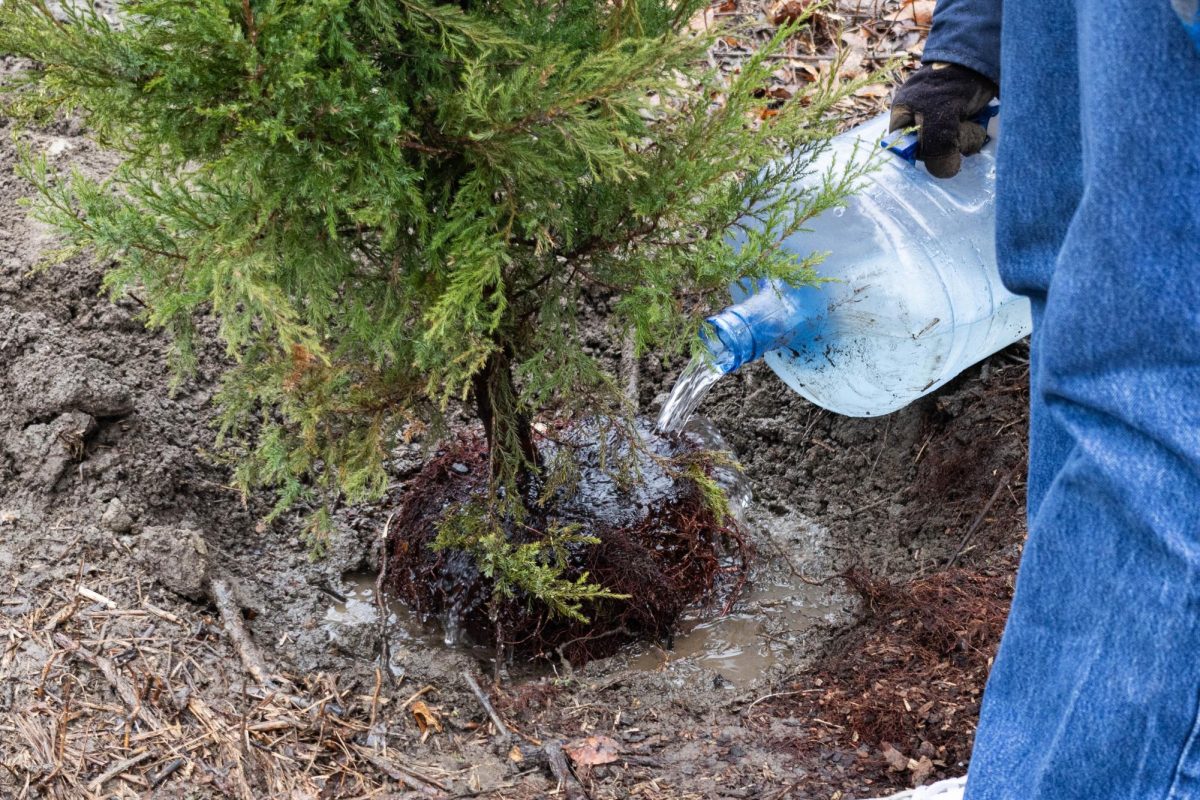
Beyond organizational support for carrying out projects, the program takes a data-driven approach to stay updated on the short and long-term impacts of the alliance’s tree plantings.
“Over the next couple of years, we’ll receive data back from our grantees about the status of the trees, how much they’ve grown, if there’s any issues, things like diseases [and] if watering has been a challenge,” Chittenden said. “If we can get that data back and make adjustments in the future, that’s something we want to do.”
Many of the organizations will implement their projects in the city this summer, with community meetings and tree planting events playing a role in the final design of the green spaces.
“People often say, ‘Oh, I’ve been living on the street for 40 years, and I didn’t know my neighbors’ names until I got involved in this project.’ So these are civic hubs of interconnectivity and social cohesion, but they’re also ways for the city to build nature-based solutions,” said Orion Kriegman, the executive director of the BFFC.
The events allow community members to bond over nature and make their blocks greener, one tree at a time.
“It’s incredibly valuable knowing how to plant a tree and knowing how to do it correctly, and the best part is just working with all of these people and spending my days planting trees instead of just sitting around,” said Liam Dunne, a fourth-year political science major at Boston University, who frequently volunteers with Tree Eastie.
The program will remain funded through the 2028 grant cycle, with the next round of funding and applications reopening this fall.
“We hope support for this kind of creativity in sustainable solutions continues especially in ultra urban areas where green space is limited and growing conditions are challenging,” Abby Oliveira, a senior land-use and sustainability planner with the Longwood Collective, wrote in an email to The Huntington News. “It will be exciting to see other grant-funded projects come to life and how we can all learn from each other and adapt our successes to other areas of the city.”