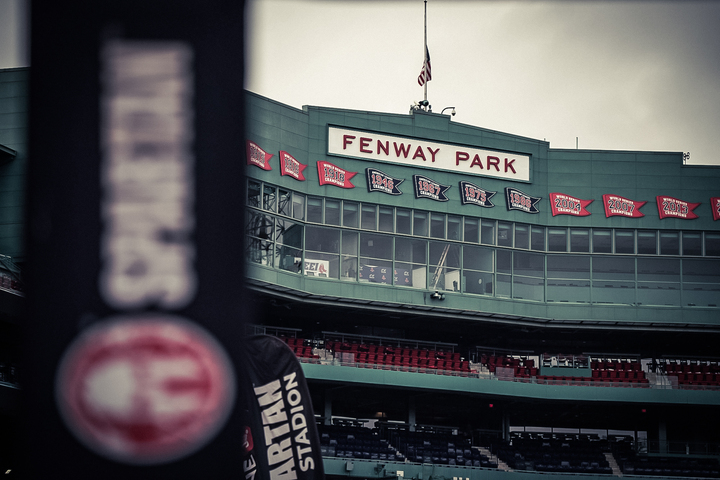
On Nov. 8 and 9, Fenway Park hosted the 14th annual Spartan Stadion, a 5K race with 20 obstacles built throughout the historic stadium. Fenway Park was the first stadium to host the race in 2012, making it the first Spartan held in an urban setting.
“I love pushing myself. I love pushing the boundaries of what I can do,” said Gavin Pigott, an electrician from Burlington, Mass., who was running his fourth Spartan of the year. “I really like these because they have so many different obstacles, they got stuff that you carry, and they got the rope climb and all that stuff. It really pushes [you] mentally and physically to get stuff done.”
The concept of Spartan Race was created in 2010 by Joe De Sena, who aimed to create a more accessible version of his 2005 invention, the Death Race, which can last up to 72 hours. The Spartan is now held in over 30 countries and has a variety of distances, including the 5K Sprint, 10K Super, 21K Beast and 50K Ultra.
The Spartan Stadion is a version of the 5K Sprint that utilizes sports stadiums worldwide as venues. Stadium racing dates back to the first Olympic Games in 776 B.C., when the stadion, a 192-meter lap, was the only event. The Spartan was also named after the ancient Greek Spartan warriors, inspired by their “grit and discipline.”
“You’re getting to see people overcome things that doctors would have told them not to do, or that they couldn’t do. Or people that probably [got told] ‘no’ their entire lives, getting to do things that a lot of people would say they couldn’t or shouldn’t,” Spartan event director Tyler Spencer said. “It’s super inspirational. That’s the thing that keeps me where I’m at, and I love it.”
Spencer, who has worked at Spartan for 10 years, began his career with the company as a racer and volunteer in 2012, following his first Spartan race near his hometown in Lynchburg, Va.
“It was so cool, and I fell in love with it. It was a ridiculously hard race, and midway through, I was like, ‘Man, I think I want to quit’ … And then I got done, I was like, ‘Wow,’” Spencer said. “This is a good story of life, of overcoming obstacles in your everyday [life].”
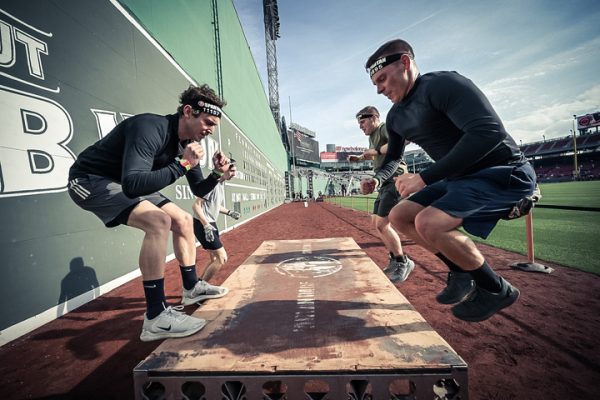
Obstacles in the Spartan can include sandbag carries, Hercules hoists, 7-foot wall jumps and rope climbs. Certain obstacles that are often present in outdoor Spartan races, like the barbed wire crawl and the fire jump, are replaced with safer alternatives, especially in historic stadiums like Fenway.
“I’m a huge Red Sox fan, so being able to do these races through Fenway is just kind of life-changing for me, going into the dugouts and all that kind of stuff,” said event volunteer Ella Kinney, an audio engineer from Marlboro, Mass.
Kinney ran the Fenway Spartan Nov. 8, her fifth Spartan race, and volunteered Nov. 9, instructing racers on where to go to the start line. Volunteers are a vital part of the Spartan and are given the benefit of a free race for their help.
“We have a volunteer program that’s the lifeline of our company. All the people that are at obstacles, people that are helping pass out medals, T-shirts, they’re all volunteers,” Spencer said. “You’ll get to see some really amazing stories, and it builds that level of community.”
Discounted tickets are also available for public service members and groups, including athletic teams or just groups of friends. Runner Martina Rennels came with a group of more than 25 people from Albany, N.Y., to represent their gym, BreakThru Boxing and Fitness. They were inspired to run the Spartan by their coach, Curtis Groff, who has been running Spartan races for seven years.
“His philosophy for why he makes us do this as a boxing gym is because you need to have a goal, versus I just want to look good in a gym. The goal for this is a competition with a score. This is something to work towards,” Rennels said.
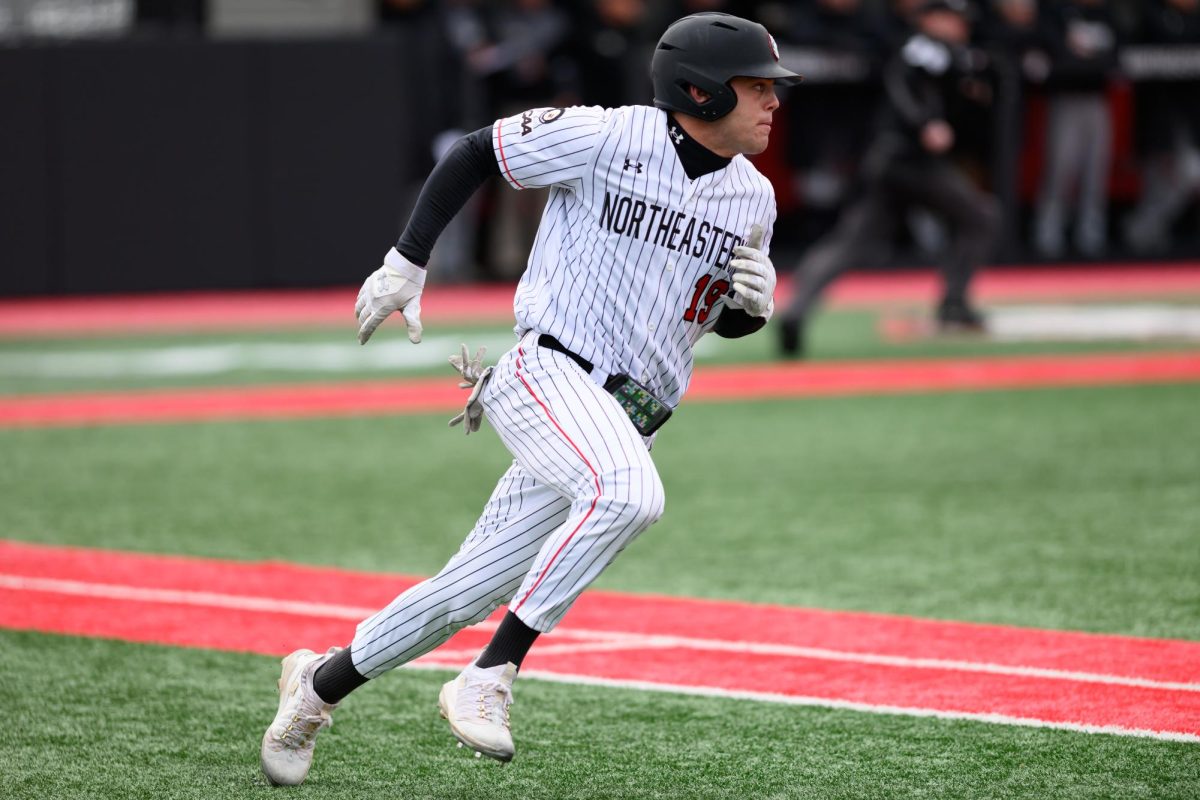
Many groups represented gyms or other organizations, including universities. Elite Heat, established at Northeastern in 2018, is a student organization dedicated to obstacle course racing. The organization participates in three Spartan races annually, including the 5K Sprint at Fenway, a 10K Super in New Jersey and a 21K Beast in Vermont.
“A big part of our club is ‘challenge by choice.’ You don’t have to do any of the races if you don’t want to,” said Amelia Weldon, a third-year chemistry and criminal justice double major and the Elite Heat event coordinator.
Weldon ran the Fenway race on Sunday alongside 36 other club members, marking her seventh Spartan race.
“I lost my best friend ever to suicide senior year of high school, and he was a huge runner. He did hurdles, loved obstacle course races, all that sort of thing. Spartan Trifecta was on his bucket list … So, initially, I did the trifecta, all three races, to get that big medal and do it for him,” Weldon said. “And, still, every single race that I do, he’s always there with me.”
Other racers competed for a variety of different goals and motivations. Jens Thoresen, an Ashland, Mass., resident, watched his daughter compete last year and raced alongside her for the first time at Fenway.
“Casey did it last year, so we watched her, and I was like, ‘Why hell am I watching? I should be doing this.’ So that’s why,” Thorsen said.
Anyone can sign up to compete in a Spartan race, though there is a varying fee depending on race type.
“Just do it, sign up,” Kinney said. “That’s the beauty of these races, is [that] they’re very beginner-friendly. You can do as much or as little as you can. It’s just about crossing that finish line. So it’s a great community, and everybody looks out for each other.”