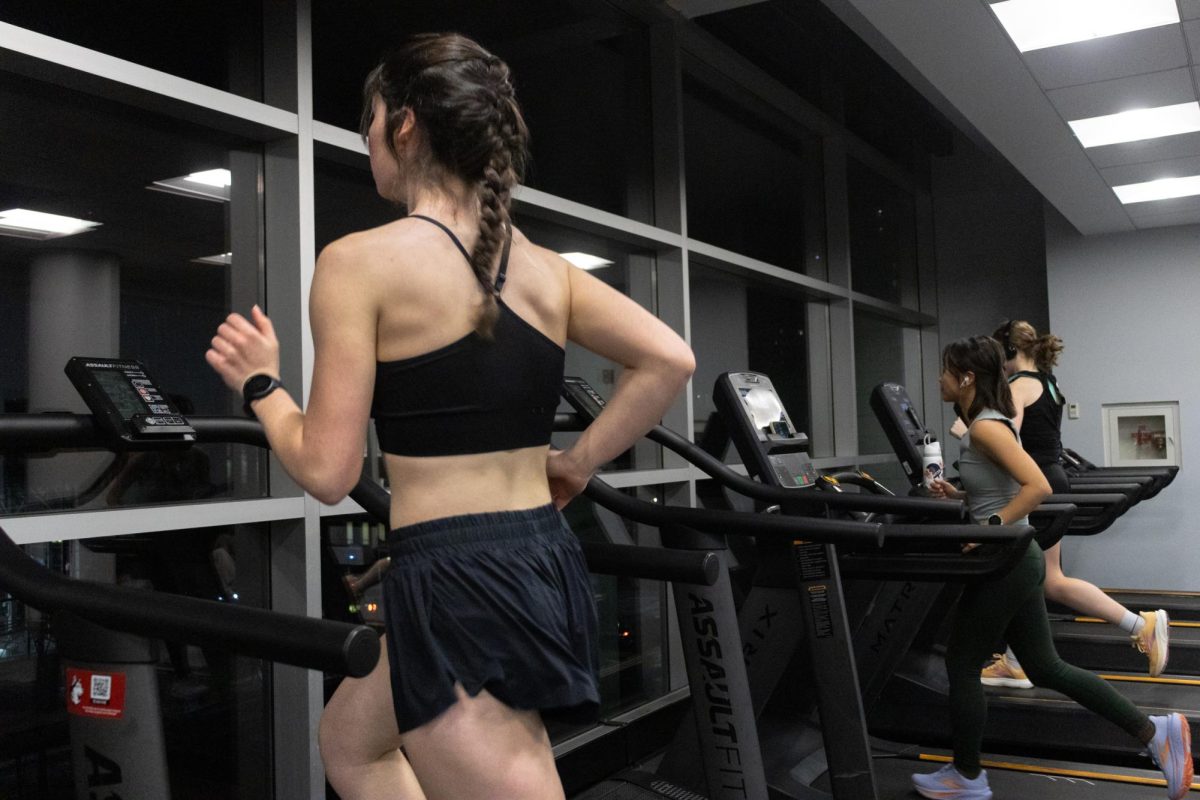
We need to stop being afraid of muscular women.
Younger generations have brought more awareness to various body types, but there is still a lack of acceptance. For example, I rarely see positive inclusivity of muscular females in conversation, media and culture.
Muscles signify physical power, which challenges the expectation that women remain visually soft and non-threatening. When women visibly reject that sentiment, even unintentionally, it creates unease.
For ages, women have been confined to notions of delicacy attached to certain body types. In the 1950s, for example, a slim waist and fuller hips were “ideal,” and the women drawn on posters were often depicted as having such features. These unattainable expectations, as well as many others, became the end goal for many women.
While, nowadays, the exact silhouette of what a woman should look like has changed, society has not — diet culture, social media and content creators strongly influence how women believe they should look and how they should lead their lives.
As someone who lifts weights, rock climbs and goes to the gym, I have felt little to no visibility in the media as a muscular woman. Aside from the occasional female bodybuilding video, I rarely encounter women who are passionate about building muscle — mostly in regard to the upper body. Most seem scared of it.
When it comes to fitness influencers, most of the content I see online is about weight loss, getting abs or growing glutes, all of which trace back to traditional beauty standards.
Society encourages women to be “fit” but solely in the aesthetic sense. Fitness, as marketed to women, often prioritizes appearance over capability. Women are encouraged to be toned and lean but never strong in a way that disrupts conventional femininity.
Strength becomes acceptable only when it is subtle. Once it crosses that boundary, it is treated as excessive, and there is pushback — markets often encourage toning rather than building and fitness programs are often designed to shrink women’s bodies rather than strengthen them.
This notion is especially evident in the fitness industry, where stigmas surrounding female body standards are present no matter participants’ ages. Gymnasts, whose bodies are built for power, control and endurance, often fall into the category of women that society struggles to accept.
The consequences can be severe: The 2022 Whyte Review, an investigation into British gymnastics, revealed several cases in which young gymnasts were shamed for their weight and were subsequently emotionally abused into starving themselves, revealing how even elite female athletes are punished for bodies that prioritize strength over thinness.
Even athletes from other sports, who have more free will surrounding their appearance, face immense pressure to choose between a “strong” and “feminine” physique. With the idea that one cannot be both strong and feminine, women in the sports industry often struggle with their body image and mental health.
This false binary is one of the most damaging myths in women’s fitness. Femininity is treated as something fragile — easily broken by strength and physical confidence. Yet muscles do not erase femininity; they expand it. The insistence that women must choose between the two reveals how narrow our definition of womanhood still is.
On a personal note, several people have made comments about how I look “too masculine” with muscle. Relatives have asked how I will wear dresses if my arms are “too big.”
These comments reflect a deeper discomfort with women exercising control over their own bodies. Typically, women are expected to show restraint, whether that means counting calories, shrinking measurements or suppressing hunger.
Muscle disrupts that framework. Unlike traditional female weight loss methods, muscle building is not about taking up less space but about attaining physical autonomy. When women pursue strength for its own sake, it challenges a system that has historically benefited from keeping women small, both literally and figuratively.
Ultimately, societal standards, rather than actual concerns about health, drive the suffocating force that is women’s fitness. If health was an actual concern, weightlifting would be recommended for the average woman.
After 50, women lose 5% to 10% of their muscle mass per decade, but weightlifting counters hormonal changes by strengthening your body and improving bone density, metabolism and long-term health while also easing joint pain and mood fluctuations for pre- and post-menopausal women.
For younger women, lifting boosts mental health, reduces stress, improves sleep and builds self-esteem. As a student, going to the gym is helpful for maintaining a positive mindset throughout the year due to the release of endorphins, a feel-good hormone.
Women who want to appear muscular should be able to exist without feeling pressure that they look “wrong” simply because they do not conform to traditional standards.
Women should not have to apologize for taking up physical space. Muscles are not a rejection of femininity. They are a reflection of commitment, self-respect and discipline.
Muscular women are not the problem. Rather, the problem is a society that still finds women’s strength threatening.
Daniela Rynott is a first-year journalism and political science major. She can be reached at rynott.d@northeastern.edu.
If you would like to submit a letter to the editor in response to this piece, email [email protected] with your idea.