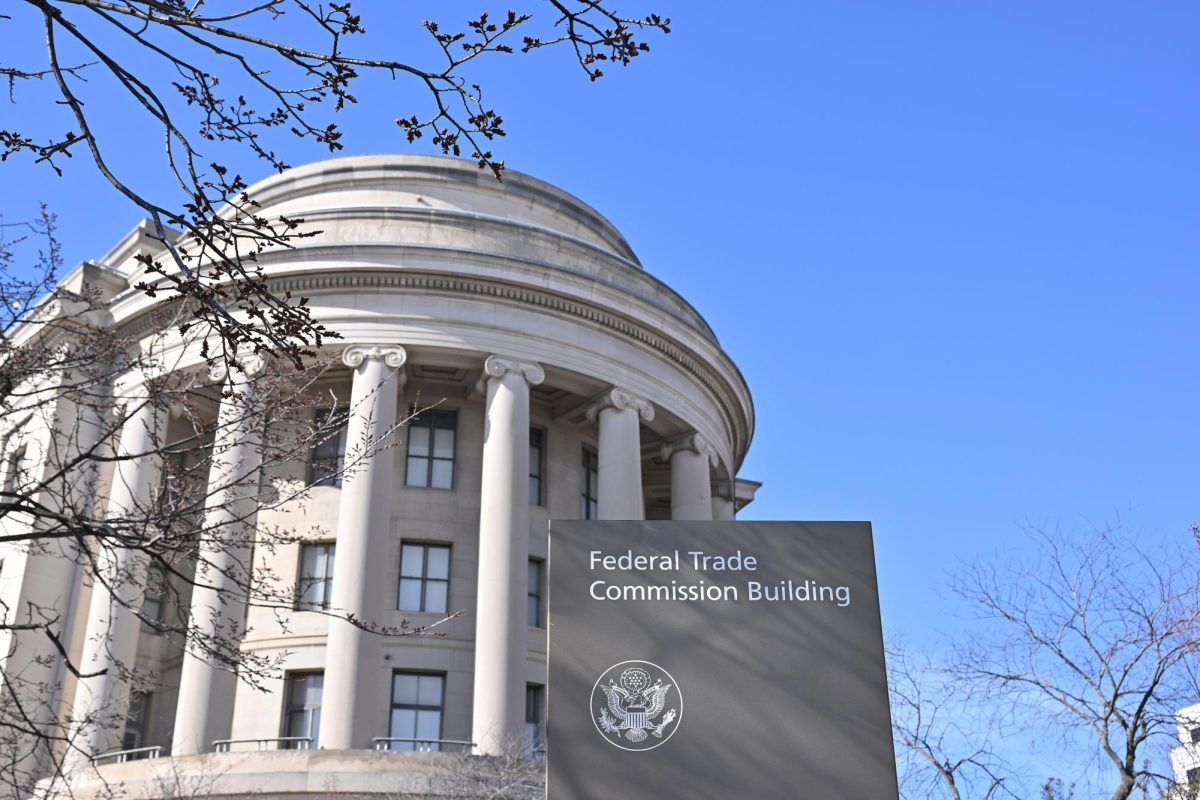
Whenever you order food through DoorDash, shop on Amazon or stream a show on Netflix, you’re participating in an economy that’s becoming dangerously concentrated. A handful of massive corporations maintain strong control over the full extent of what you consume and the prices you pay; however, there’s supposed to be a powerful government agency to keep things fair and protect consumers from monopolistic abuse.
As of late, however, that’s not the case. President Donald Trump’s interests have taken priority as his administration sidelines the Federal Trade Commission, or the FTC, in its vital task of defending competitive markets.
The FTC, which is supposed to protect consumers from harmful and deceptive business practices and promote fair markets, has been systematically weakened throughout Trump’s second presidency.
Trump removed two Democratic commissioners without cause, despite legal challenges to these unprecedented removals. His administration has brought the agency face-to-face with staffing reductions, budget constraints and federal pressure to prioritize its political agenda over consumer protection.
Meanwhile, Trump signed an executive order that directed independent agencies like the FTC to have their rules cleared by the White House, fundamentally undermining the independence they need to challenge powerful corporations without political interference. Trump said the order was in the name of “ensuring a government that answers to the people,” but don’t be fooled — it’s just so the president can ensure these agencies follow his personal politics.
Another troubling development is that while the FTC gets weaker, corporations are getting more creative in dodging the antitrust regulations designed to keep markets fair.
When government regulators started scrutinizing big acquisitions more carefully under Lina Khan’s FTC, tech giants found a simple workaround. A recent tactic includes what’s called the HALO effect, or “Hire and License Out:” Instead of purchasing competitors outright, tech giants acquire the business’ core functions by hiring its top talent and paying licensing fees for its products/services. This gives tech giants every piece of the company they need while avoiding the regulations that would typically come with a giant merger or acquisition.
Google used this strategy with several AI companies, absorbing their entire workforce and products. Meta did the same with Scale AI. Most recently, Nvidia eliminated a promising competitor by hiring its entire leadership team through a licensing deal. The result? Companies that could have offered consumers cheaper products or better services simply disappear, and top tech firms maintain monopolistic control over their industries.
This corporate shell game is a symptom of a much larger problem: Antitrust enforcement has become a political tool rather than a consumer protection mechanism. Under Khan’s leadership, the FTC challenged numerous mergers and forced companies to abandon anti-competitive deals, saving consumers billions in potential price increases. Her agency finalized rules banning exploitative noncompete clauses that trapped workers in lower-wage jobs and cracked down on fake reviews that mislead shoppers.
Now, consider the current state of things. The Trump administration has overseen a corporate merger boom worth over $4 trillion, including Netflix’s recent $72 billion acquisition of Warner Bros. Discovery. Trump’s antitrust officials have signaled a willingness to facilitate dealmaking through increased settlements while using enforcement tools to target companies based on political grievances rather than consumer harm.
The consequences of politicized antitrust enforcement will show up in your daily life in concrete ways. When grocery chains merge without adequate scrutiny, you pay higher prices for food. Your streaming services, music platforms and any tech in your life goes up in price. Students already suffer massively due to monopolization of college dining halls, textbooks and even college applications. Antitrust, and a lack of it, impacts every aspect of our lives whether we like it or not.
This administration’s political influence makes everything worse. Seven major corporations with pending antitrust cases recently donated to Trump’s White House ballroom fund, raising obvious concerns about whether enforcement decisions are being made based on political favoritism. Ordinary consumers lose out as Trump hands out favors to those who fund his personal projects.
The fight is not already lost. Antitrust enforcement can be altered due to political pressure. When citizens demand competitive markets and try to hold politicians accountable, they can shift how politicians pursue an issue. When the public stays silent, corporate consolidation accelerates and everyone else suffers. Do not accept an economy where corporate giants can eliminate competition through clever tricks and political connections. All of our wallets, economic freedoms and even potential career prospects depend on correcting this issue.
Phil Warren is a second-year mechanical engineering and physics combined major. He can be reached at [email protected].
If you would like to submit a letter to the editor in response to this piece, email [email protected] with your idea.