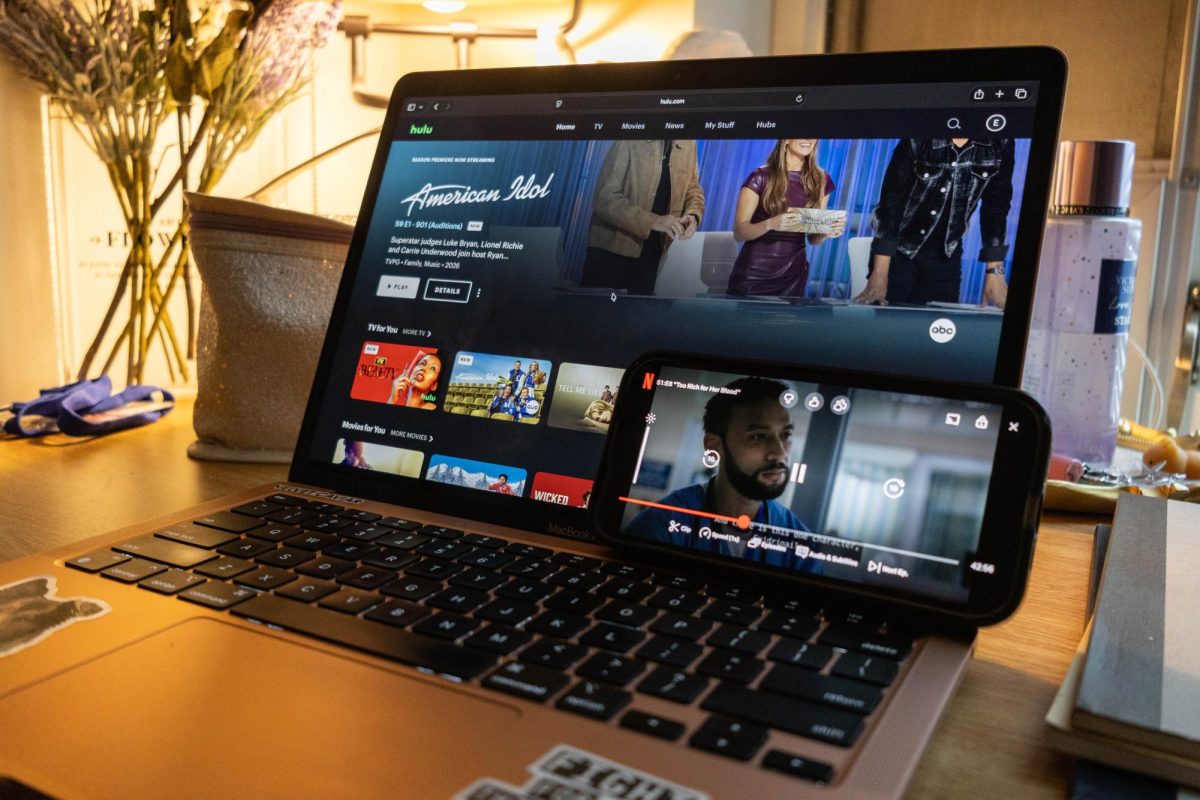
Nine years ago, Netflix released the first season of “Stranger Things,” receiving an overwhelmingly positive critic and audience response — measuring up to a 96% audience score on Rotten Tomatoes.
The final season, which was released this past December, had the same core writing team, producers and cast. But the audience score? Just a 53% approval rating.
This isn’t the first time an original show has deteriorated in quality on a streaming platform — shows like “The Umbrella Academy,” “13 Reasons Why” and “The Boys” have all been criticized by fans for the same reason — and it won’t be the last. Streaming services are also notorious for cancelling fan-favorite shows outright.
As streaming services continue to grow in influence and popularity, there’s a high chance that the TV shows and films we love are going to be controlled by at least one of these platforms. Or, with Netflix’s acquisition of HBO Max and Warner Bros. in December 2025, they might all soon be controlled by a single platform.
It’s not a secret that streaming services prioritize viewership over quality; it’s what their business model relies on. When streaming services were on the periphery of film and television, providing platforms for already successful movies and TV shows, this might not have seemed like a big deal. But the landscape has changed significantly, and streaming services are no longer small platforms for already-produced media.
Streaming media gained popularity when Netflix’s original business model, mailing physical DVDs, switched to an online platform in 2007. In 2013, “House of Cards,” the first Netflix-produced show, premiered on the platform. Since then, online streaming has become the primary way to consume television and film.
It’s not just the content that lacks quality but the platform itself — YouTube creator Drew Gooden released a video making fun of and showcasing the flaws of streaming services’ search functions. Searching “Christmas” on some of the most popular streaming apps only shows the top 15 or so films, depending on the app, only pushing the content that its algorithm deems most relevant to you as a user.
This creates an echo chamber effect, which is harmful to both the consumer and artist. It’s harder for independent movies to compete with the well-funded and highly-marketed original shows and movies created by streaming services, especially when it’s housed on a platform, specifically Netflix, that’s pushing its own content tirelessly to consumers.
For the consumer, this echo chamber means scrolling through the same five recommended movies of the same genre. Not only is that annoying, but it takes away one of the most meaningful benefits of consuming art: building empathetic patterns.
If we’re only interacting with content that aligns with what we’ve already viewed or taken interest in, we’re limiting the perspectives we can connect with. This is a major problem across the internet as a whole, particularly social media algorithms. Streaming services are trying — and succeeding — in building this echo chamber into all of the media we consume.
It’s easy to forget that streaming services aren’t just home to low-quality content focused solely on making a profit — they’re home to the art we love. That’s why, when we’re confronted with this fact — either by our favorite shows being ruined or canceled — it catches us off guard.
There’s no denying it — we handed over the control of the movies, film and even music we love to companies that don’t care about art. They never have.
Some TV shows and movies produced by streaming platforms are high-quality and beloved by fans. In fact, there’s plenty of arguments in favor of streaming services, particularly the way they provide a home for independent movies that would otherwise be lost to a limited theatrical release. But there’s another problem with allowing streaming services to monopolize the film, TV and music industry — and it has to do with the artists.
In the past, physical media sales or online sales were crucial to support smaller musicians financially. Now, music streaming services pay by stream, making it more difficult for artists to make a significant income. As for writers working in film or television, there are myriad problems, including streaming services removing original movies and TV and offering less financial stability for TV writers than traditional broadcasting.
The answer to combatting streaming services isn’t radical. Go buy physical media. Not only do you actually own the piece of art you love, but you’re supporting artists in a more direct way.
It’s also key not to fall victim to the algorithm’s echo chamber — go research new movies and TV shows, read movie blogs online (yes, they still exist) and watch something different. As fun as it is to watch the same dystopian YA movie about a teenage girl, it’s equally fun and probably more important to expand your horizons and watch something completely new to you.
If a desire for convenience is what got us to the streaming service craze, then an embrace of the inconvenient — going out of our way to buy physical media or research new independent movies — is what can get us out.
Nora Harr is a second-year English and computer science combined major. She can be reached at [email protected].
If you would like to submit a letter to the editor in response to this piece, email [email protected] with your idea.