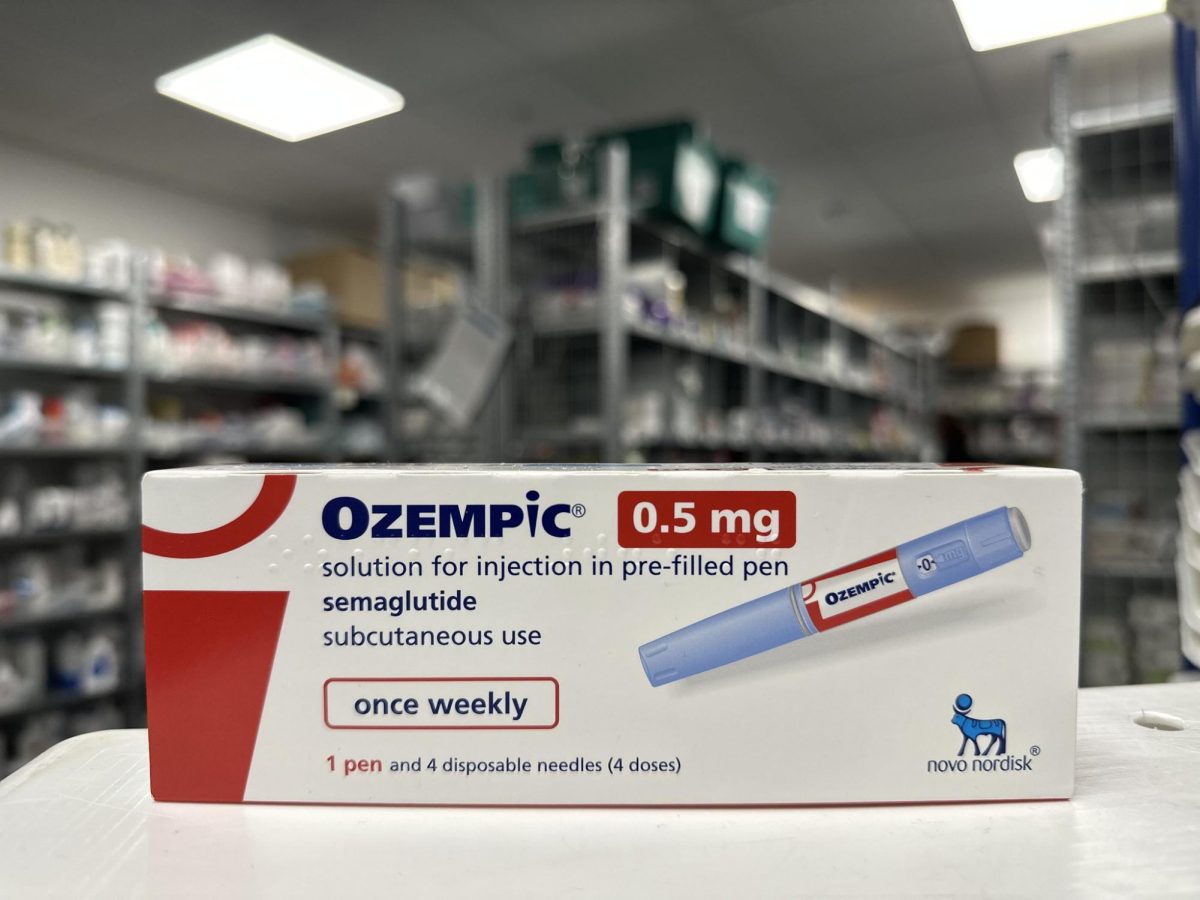
With numerous Super Bowl ads, Ozempic has been thrust back into national discourse.
Its proximity to strong emotions has led to impassioned arguments, often with little room for nuance.
And that’s the failure of Ozempic: not the drug itself, but the fact that pharmaceutical companies, marketers, capitalists and culture wars have rendered a miracle of modern medicine controversial.
Broadly, there are two tents in the Ozempic and broader GLP-1 discussion: for and against. In the “for” camp there is Big Pharma, whose message seems to be that literally everyone should be taking Ozempic. That argument was made impossibly clear by the recent ad from the wellness company Ro, featuring Serena Williams proudly announcing that she has lost 34 pounds in a year due to GLP-1 treatments.
The ad was rightly reviled, with fans and critics alike bemoaning the obviously harmful subtext of the advertisement — that if the beautiful, powerful, athletic Williams needs GLP-1s, just imagine how badly you need it. This is an ad deeply rooted in our current pharmaceutical ethos, one that sees everyone as a potential patient (read here: money-making opportunity) regardless of how sick they are or how much care they need.
Rejection of this ethos, which is often the subtext of criticism toward the ad, is an entirely reasonable and positive sentiment. But in the sea of backlash, it’s possible that the point wound up drowned.
Hatred of Ozempic grew almost as fast as the drug did. Arguments against Ozempic came from an unlikely collection of Make America Healthy Again, or MAHA, anti-pharm activists, body-positivity groups and regular compassionate people rejecting how mean-spirited the Ozempic rollout felt.
Despite different starting points and different arguments, these groups wound up in the same place. The MAHA crowd, ever eager to marginalize people suffering from obesity, feel that Ozempic is an “easy way out” — inferior to lifestyle changes like diet and exercise. The body-positivity groups see Ozempic as normalizing the notion that people should change their bodies, worsening self-image. Finally, many average consumers simply reject the way that the Ozempic ads are designed to make them feel — and as a result, reject the drug.
The problem with these perspectives, however reasonable or unreasonable their motivations may be, is that they conflate the way Ozempic is being sold with the drug itself.
GLP-1s are a miracle drug. They work significantly better than any other weight loss tool currently on the market, and although they have side effects, these are marginal when compared to the alternative.
It is obesity that contributes to nearly 500,000 deaths in America annually and reduces life expectancy by approximately 2.4 years. Obesity increases the risk of type 2 diabetes by up to four times. Obesity contributes to 60% to 70% of hypertension cases. It increases risks for stroke and heart failure and is linked to over 123,000 new cancer cases annually.
By every available measure, obesity is a public health crisis. And GLP-1s are a powerful new tool to fight it.
The problem here is ultimately one of framing, and a loss of sight from the pharmaceutical industry about what it exists to do. Pharmaceutical companies want the drug marketed to everyone because that’s how they can make the most money. But that’s not what drugs are for.
The public, justifiably exhausted by decades of exploitation and unfair treatment at the hands of a medical system that sees them only as a resource, has pushed back — maybe too far. The result is that a drug that should be celebrated as a triumph of modern medicine has become a casualty in culture war battles about things much broader than GLP-1s.
No one is wrong to be angry with how Ozempic is being marketed. But if we let that anger obscure what GLP-1s could represent for millions of Americans, then the people who suffer aren’t the executives or advertisers. They’re the people who always suffer: the patients.
Arvind Chettiar is a third-year business administration and political science combined major. He can be reached at [email protected].
If you would like to submit a letter to the editor in response to this piece, email [email protected] with your idea.