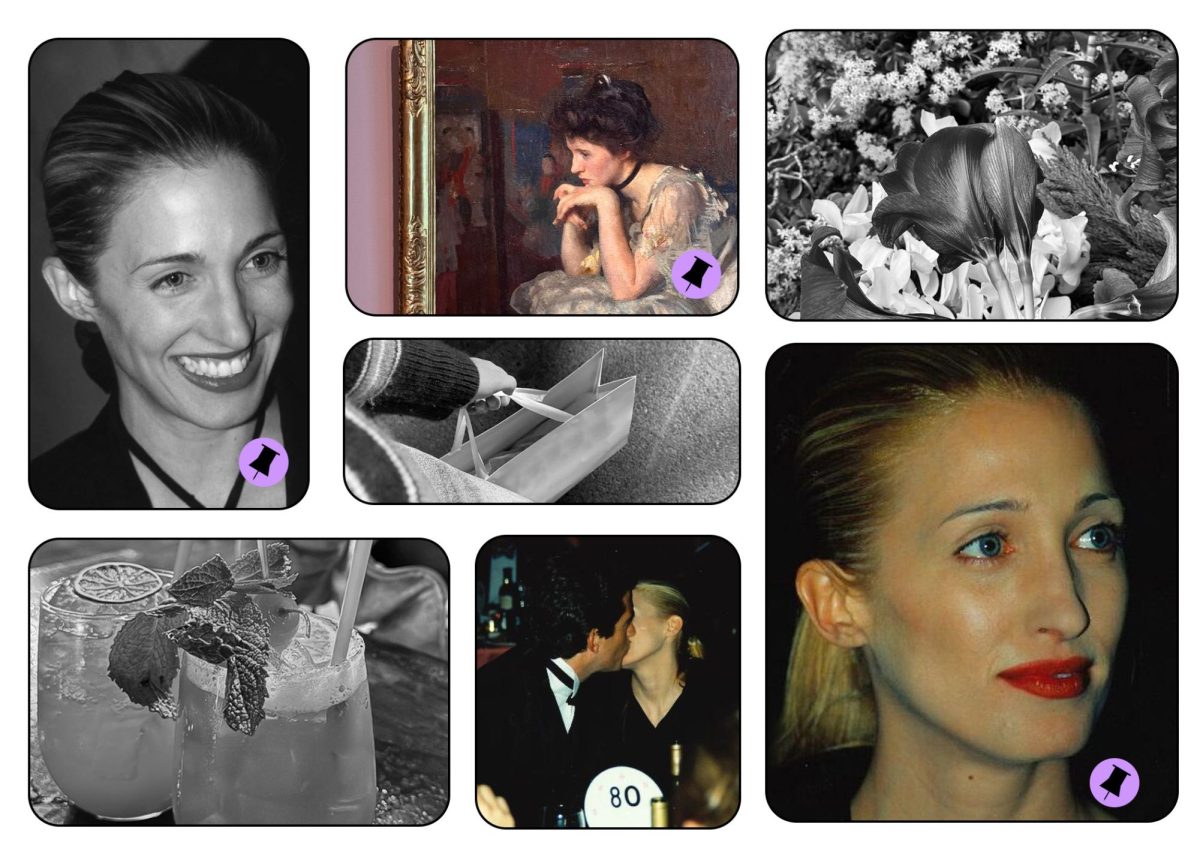
Every so often, you become a different kind of person for 10 weeks. You save the Pinterest board. You buy three or four things that feel like they belong to this new version of you. You adjust small details: the way you do your hair, the coffee order, the colors of your Instagram grid. For a brief window of time, you feel assembled.
Then, quietly, the feeling wears off. The clothes stay in your closet. The Pinterest board stays saved. But you are already looking for the next aesthetic while scrolling through TikTok.
This cycle has played out three, maybe four times since 2022. Cottagecore, then clean girl, then quiet luxury — and now, courtesy of a Ryan Murphy series and a generation’s worth of paparazzi photos, Carolyn Bessette Kennedy, or CBK.
The CBK moment is worth paying attention to because of what it claims to be about. The woman herself removed the labels from her clothes and wore the same pieces until they showed wear. She married into one of the most famous families in America and responded to the attention by trying to disappear. Everything that made her compelling was rooted in the fact that she was not performing for anyone. She just got dressed and left the house, which in 2026 apparently qualifies as an entire aesthetic.
So now there are TikToks breaking down what she would wear to a bar. Capsule wardrobes built from her paparazzi photos. Shopping guides for recreating the look of a woman whose entire appeal was that she was not thinking about how she looked.
None of this is new. It is the same cycle running on a new reference. And the cycle, at this point, is familiar enough to warrant asking what it is actually about.
Because it is not really about clothes. It is about identity. Or, more specifically, the absence of one.
The thing about a pre-named “aesthetic” is that it arrives fully formed. You do not have to figure out what you like. You do not have to sit with the slow, uncomfortable process of developing taste that is yours and no one else’s. You just adapt. When you have been picking from a menu of identities online since middle school, borrowing is easier than building from scratch. Nobody is going to question your camel coat. The camel coat has already been approved by the internet.
The problem is not that people try on different styles. That is just being young. The problem is the speed of fashion cycles and what this speed prevents. Developing a sense of identity — in fashion or in anything else — requires a period of staying. You wear something not because it has been pre-approved but because something about it makes you feel a way you cannot entirely explain. You keep wearing it. Over time, without a trend cycle to organize it, a pattern forms that is yours in a way that does not need a name. That process is slow, unglamorous and sometimes embarrassing. It cannot be purchased in a capsule wardrobe. And it is getting harder to protect in a culture that offers you a new self every eight weeks.
Quiet luxury is a good example of what happens when the staying never occurs. It started as a rejection of loud logos, something that seemed almost countercultural. Within a year, everything beige was being called “quiet luxury.” A linen set. A plain white t-shirt. A “no logo” became its own kind of logo. The term expanded until it meant nothing because the people using it were never really committed to the idea. They were committed to the feeling of having found something, which is a different thing, and a temporary one. When that feeling faded, they moved on, and the next aesthetic was already waiting.
Bessette Kennedy is an interesting figure to land on right now because what people say they admire most about her is her consistency. She wore what she wore. She did not revise herself every season. Friends described her as someone who was at ease in her own choices, as though she had decided once and then stopped deciding. That steadiness is the thing people are actually drawn to, whether they realize it or not. Not the camel coat. Not the headband. The fact that she seemed to know who she was and was not going to change her mind about it.
That is also the one thing about her that cannot be replicated by following a shopping guide. You can buy the coat. You can find the tortoiseshell headband at the oldest apothecary in the U.S. located in Greenwich Village. But the feeling of being settled in your own identity is not something that comes from a reference image. It comes from staying somewhere long enough for it to become yours, which is exactly what the cycle is designed to prevent.
Nobody talks about the staying because there is nothing to sell at the end of it. There is no guide for the slow process of figuring out what you like without checking whether it has already been approved. The algorithm does not reward consistency. It rewards the new.
And so, the closet fills up with versions of people you almost were, and the cycle continues. The question underneath all of it stays the same: not “What should I wear?” but “Who am I when I am not borrowing the answer?”
Nobody is expected to have figured that out by 20. But it would be nice if the culture made it easier to try.
Sana Gandhi is a second-year business administration major. Sana can be reached at [email protected]
If you would like to submit a letter to the editor in response to this piece, email [email protected] with your idea.