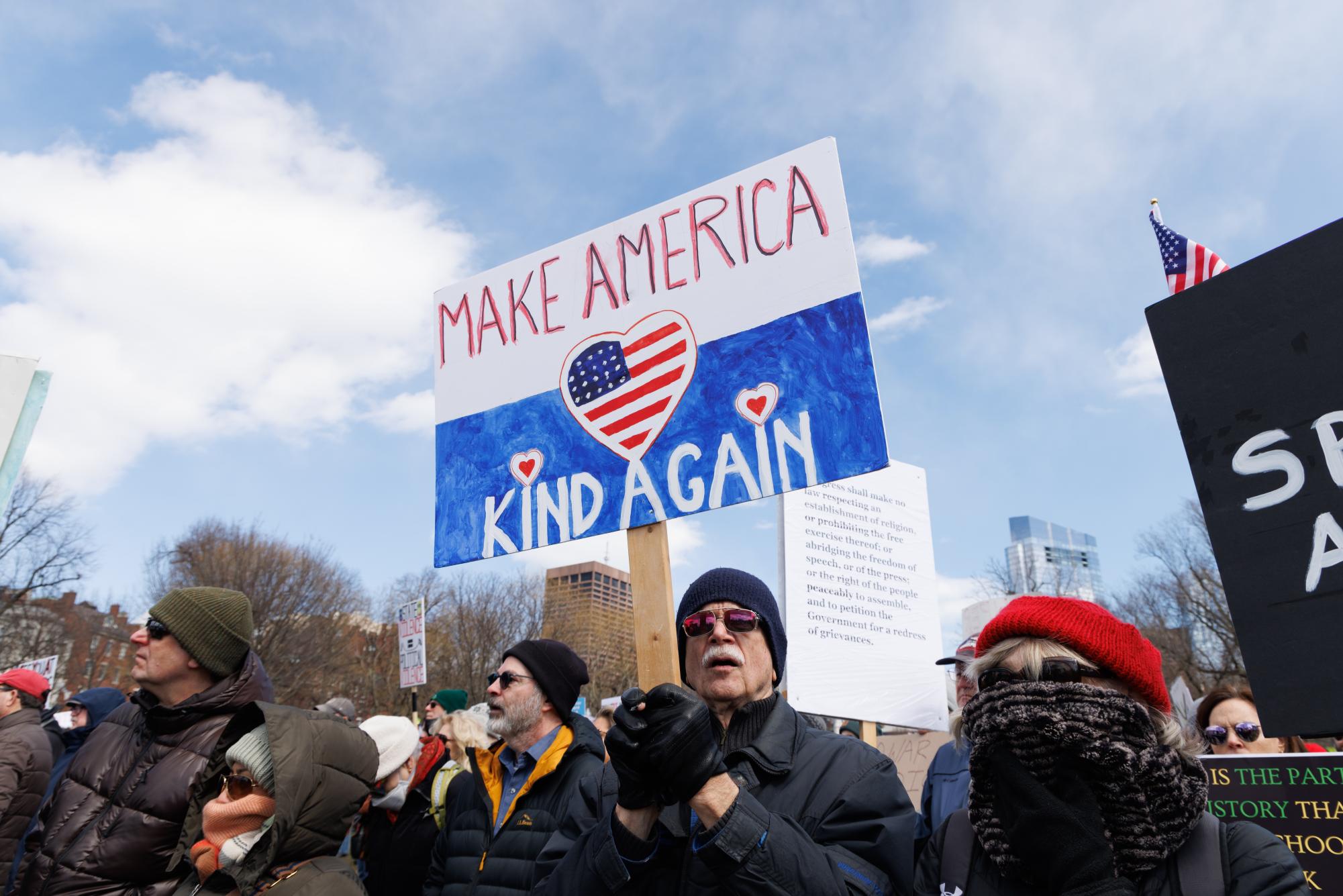
More than 150,000 people packed into Boston Common March 28 to protest President Donald Trump in the third wave of nationwide “No Kings” protests.
According to the “No Kings” website, upwards of 8 million people total attended more than 3,000 associated demonstrations took place across all 50 states and abroad in what organizers claimed was one of the nation’s largest single-day protests in history. Organizers said the “day of action” was held to condemn several Trump administration policies, including perceived attacks on freedom of expression, the ongoing war in Iran and the aggressive deployment of Immigration and Customs Enforcement, or ICE, officers.
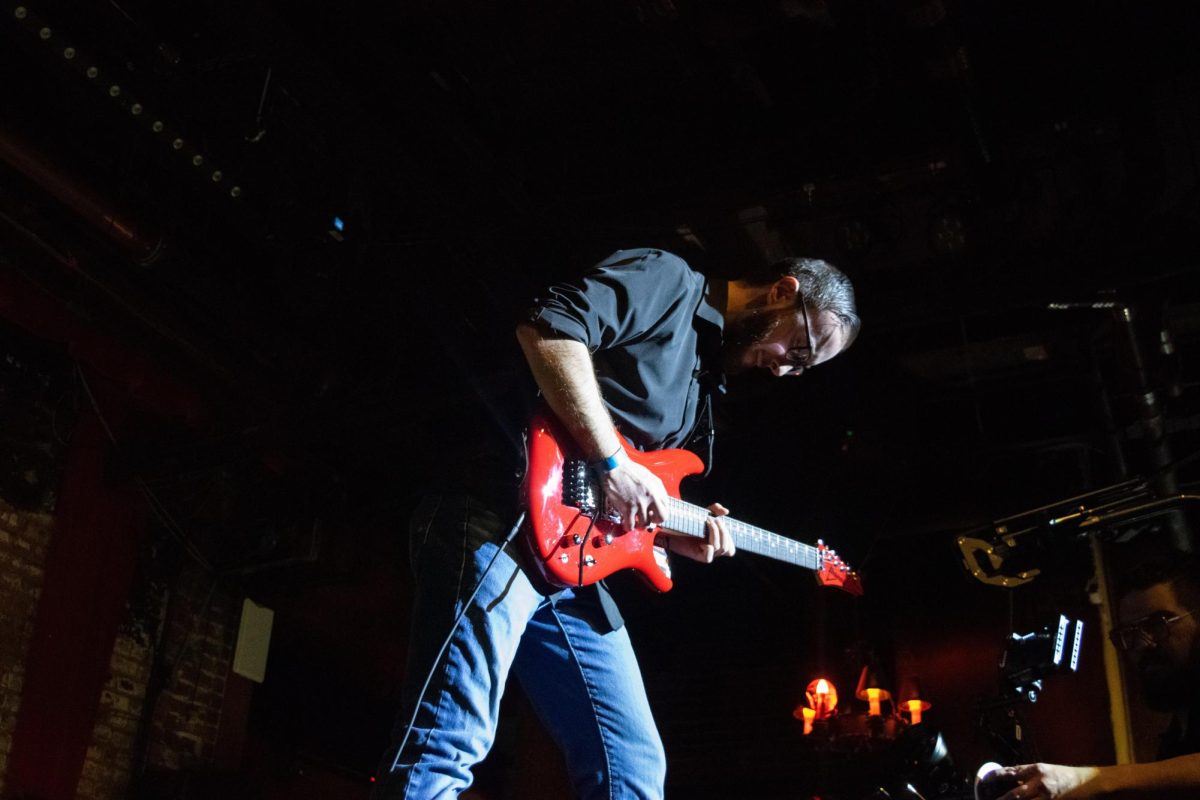
The Boston protest featured a diverse lineup of speakers and performers who took to the stage near the corner of Beacon and Charles Streets. Massachusetts Gov. Maura Healey, U.S. Sen. Ed Markey and Marcelo Gomes da Silva, the Milford teen who was detained by ICE last year, delivered speeches before a performance by Celtic punk band Dropkick Murphys.
“The American Revolution started right here across the Common,” Markey told the crowd. “The Civil Rights Movement, the Freedom Riders, they started right here on Boston Common. They were knocked down, they were not knocked out, they got up, they fought and they won.”
Organizations set up dozens of “action tables” around the Parkman Bandstand, where spokespeople from various activist groups galvanized support. Massachusetts resident Parmelee Eastman hosted the table for the Indivisible Massachusetts Coalition, or IMC, an organization that aims to support democracy. Eastman said she campaigned for Hillary Clinton in the 2016 presidential election, and after Trump won, she decided to join IMC to stand up against him.
“I feel very good with IMC. We’ve been very successful,” Eastman, who represents Massachusetts’ second congressional district in IMC, said. “We’ve doubled in size since Trump was reelected. I’m leveraging my expertise by finding people out here and introducing them to local organizing groups, which feels amazing.”
Alongside Eastman was a table representing a local chapter of the American Federation of Teachers, where organizer and former teacher Brian LaPierre works to mobilize Boston workers.
“As it builds and grows, we are fighting against authoritarianism, we are fighting for our democracy and we want to make sure that communities see teachers on those front lines,” LaPierre said. “We are on the chopping block in a lot of ways, and we are the remedy and the antidote to that.”
Debbie Paul, a lead organizer at the IMC, said the organization’s leaders wanted action tables at the protest to further the movement.
“‘No Kings’ events are part of movement building, getting more people connected, so we can get to that 12 million or 3.5% of the total population,” Paul said, citing a concept that claims nonviolent protests involving 3.5% of the total population always succeed in creating change.
Many protesters came out in droves with flags, signs, t-shirts and costumes condemning the Trump administration. Sarah Caiazzo Pyke, a youth advocate based in North Central Massachusetts, donned the red robes and white bonnet of a Handmaid from Margaret Atwood’s dystopian novel, “The Handmaid’s Tale.” She said she chose to dress as the fictional enslaved women to raise awareness about the survivors of the rape and sex trafficking ring orchestrated by Jeffrey Epstein, who reportedly had a close and long-lasting friendship with Trump.
”Me personally, I’m a survivor, and the effect of watching your extended family or just people in your community treat Epstein survivors that have gone through horrific, devastating crimes like it was nothing, it’s devastating,” Caiazzo Pyke said. “I want to bring some closure and comfort to those people who have gone through so much, because they’re not alone.”
Caiazzo Pyke added that April is Sexual Assault Awareness Month, which she said will be “a really great opportunity to be supporting survivors, to join initiatives for survivors and to attend all the events that will be happening for survivors.”
Just below the Soldiers and Sailors Monument, more than 100 pairs of girls’ shoes and 13 pairs of combat boots were displayed across the grass to honor those who have lost their lives in the U.S. and Israeli bombings in Iran.
“It brings the war home to people. You look at these little shoes, and it can be your kid, your grandkid, and it makes it real to them. It’s not just about dollars and explosions, it’s about people’s lives,” said Bahar Sharafi, a member of the National Iranian American Council’s Massachusetts chapter and an organizer of the travelling exhibit, titled Eyes Wide Open: The Cost of War.
Sharafi emphasized the importance of continuing protests and getting the attention of elected officials.
“I just want Americans to be on the streets and create enough disruption that this administration feels enough pain to change its course,” Sharafi said.
The next scheduled mass protest is May Day, according to Paul. On May 1, participants will refrain from work, school and shopping in order to create a significant economic disruption in the country.
“Everybody needs to participate,” Paul said. “It’s going to be led by unions, but it can’t be only unions. It has to be everybody.”