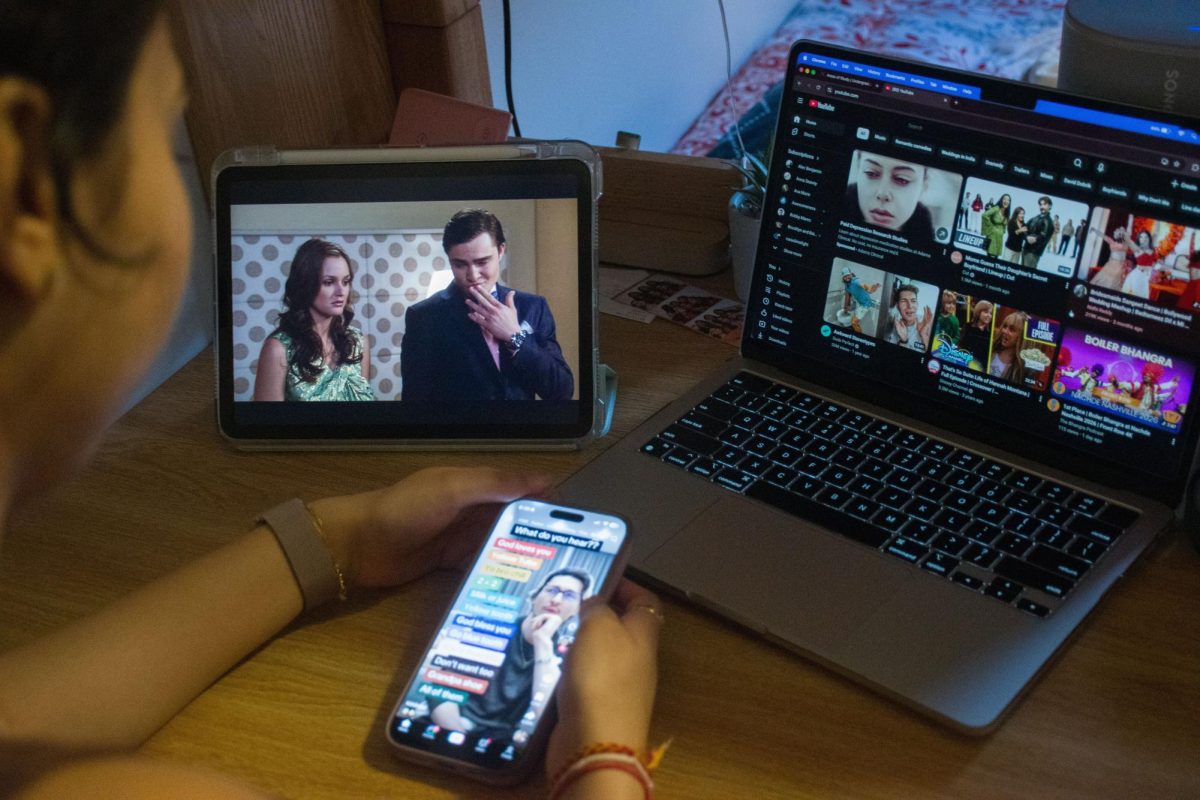
Once upon a time, in a world far, far away — are you still reading? The average attention span of Gen Z is less than eight seconds, which means that most students would have scrolled away by now. TikTok has fundamentally changed how students spend their days and nights.
Since becoming popular, TikTok and Instagram have exploited human psychology to make billions in revenue. Not only do they provide minimal value, but they often cause significant damage — which is exactly why these apps should be deleted from your phone.
There is one key factor responsible for these apps’ addictive nature: intermittent variable reward. The concept originated from B.F. Skinner’s experiments on operant conditioning, which found that voluntary behavior is controlled by its outcomes or results: rewards or punishments. When rewarded unpredictably, like when scrolling your feed, this behavior becomes highly persistent.
TikTok and Instagram use this principle ruthlessly. At the most basic level, these apps show you a short video, and when you’re not interested, you swipe to see another. While yes, their infamous algorithms fine-tune content to perfectly match your interests, you’re undergoing a massive confirmation bias that makes these algorithms seem better than they actually are. For instance, you may scroll past 10 videos in seconds, but on the 11th, you find something stimulating — giving you the “reward” you seek while making you forget about all the content you ignored.
Exactly like a slot machine, the design entices you to scroll one more time because, maybe, the next piece of content will be life-changing. Furthermore, addictive design patterns saturate these apps — vibrant colors, pop-up notifications, sound effects, temporary stories and endless scrolling that never reaches a natural stopping point.
That same incentive applies to posting: Both platforms promote content unpredictably, giving any user a chance to go viral. Content creators attempt to make viral videos, but since only some of them perform well, they keep making more as they wait for the “reward” of high viewership. Casual users can also become hooked after a random video of theirs gets tens of thousands of likes, giving them a rush of attention and fame that many want to feel again.
But what value do TikTok and Instagram actually provide? Sure, for creators, these platforms can launch careers. Also, for us average consumers, there’s value in discovering restaurants and learning skills. Some Northeastern students say they use TikTok as their version of Google: to find new restaurants and look up what to wear to a concert.
But at what cost?
It’s important to notice how we use these apps. Active consumption, or deliberately searching for specific content, is crucial to enjoying any of its benefits. If you wanted to plan a Paris trip, you wouldn’t just scroll aimlessly; you would search for Paris-related content. After all, TikTok isn’t unique because it provides information; what originally distinguished it was its encouragement of passive consumption. When you open Tiktok, you don’t choose what to watch; you’re shown content without having to actively look for it.
So, what value does this passive consumption provide?
Entertainment is one answer. Its subjective nature makes it difficult to refute — who’s to say one form of entertainment is “better” than another?
But many people would agree that harmful entertainment is dangerous.
Studies show that TikTok and Instagram actively worsen your mood. Some students don’t want to believe this but will quickly admit that sad dog videos or other emotionally charged content changes the way they feel. This contradiction reveals that we’re often unaware of these apps’ emotional toll. Research has found that increased social media use, particularly short-form video content, correlates with heightened anxiety, depression and loneliness among young adults.
I often hear the people around me mentioning that they’re “addicted to Instagram Reels” and watch “really dumb Reels,” but they keep scrolling. The mechanism is insidious. By artificially inflating your dopamine baseline through constant stimulation, real life becomes comparatively dull. Conversations feel less exciting. Studying seems impossibly boring. You need the app just to feel normal.
Mental health professionals say this dopamine dysregulation mirrors patterns in gambling and substance abuse. I spoke with students who said they were so hesitant to delete these apps because social media is how they keep up with friends, even though they admit that most of their time is spent watching content from strangers.
Your attention span is collapsing. That eight-second statistic I mentioned earlier? It’s not natural — it’s engineered. When your brain expects new stimulation every few seconds, anything requiring sustained focus becomes agonizing.
Reading this op-ed probably feels challenging. Sitting through a lecture without checking your phone feels impossible. You’re not lazy; your brain has been rewired to crave constant novelty.
The “brain rot” culture we’re living in isn’t inevitable; it’s a choice. Every time you open these apps, you’re choosing to let corporations profit from degrading your attention, manipulating your emotions and distorting your worldview. You’re choosing dopamine hits over sustained happiness and instant stimulation over deep engagement. By actively choosing how you want to spend your time, you can avoid the passive consumption traps that these companies have spent billions designing and live a better life.
Boredom isn’t a problem to be solved, it’s a space where creativity, reflection and genuine rest happen. By filling every moment of boredom with content, you’re not enriching your life. You’re running from it.
In this beautiful and unique world, should TikTok and Instagram be your entertainment?
Andreas Padilla is a second-year computer science and philosophy, and economics major. Andreas can be reached at [email protected].
If you would like to submit a letter to the editor in response to this piece, email [email protected] with your idea.