As Paul Revere famously said in his galavant through the streets of Boston, “The British are coming! The British are coming!” But now it’s tourists, students, city residents and street performers who flock to these cobblestoned roads.
All around the city, the historic Freedom Trail lays the stepping stones for history, culture and community.
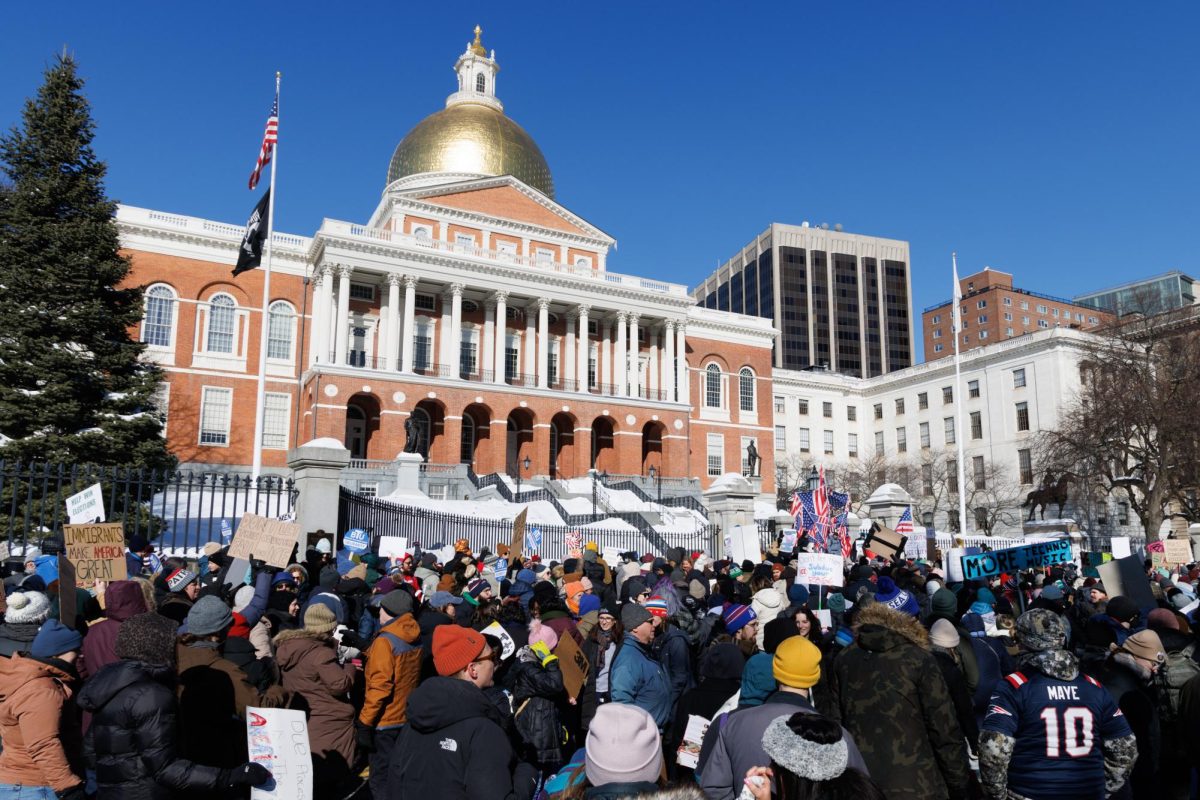
The 2.5 mile brick path runs along the sidewalks of Boston, not only connecting historical landmarks that symbolize America’s founding but also celebrating culture and displaying talent from all over the world. Some notable sites include the Old State House, Faneuil Hall, the Massachusetts State House, King’s Chapel and the Boston Common.
The trail has preserved America’s roots while providing a space for locals to relax and visitors to indulge in live music, walking tours and a taste of the city.
Sept. 14 marked a snapshot of a day walking along the Freedom Trail.
The trail kicks off at the Boston Common, the oldest public park in the United States. Avery Chayapruks, fourth-year mechanical engineering major at Boston University, goes to the Commons almost every month. To her, it is a great outlet to be outdoors and enjoy the last few warm days in Boston.
“I think it’s cool that, at least as a college student, being here, there’s so many of us out here,” said Chayapruks. Even though [the city is] very historical, it’s also young at the same time, so history is still kind of being made, while [surrounded] in the past.”

Chayapruks sits perched under a tree doing homework Sept. 14. She came to try Flour Bakery + Cafe, which has a new pop-up store at the Common.
Strolling further down the path, David Pogue, lecturer at Osher Lifelong Learning Institute at University of Massachusetts Boston, finds himself at the Granary Burying Ground two to three times a week.
Pogue has a unique way of enjoying the trail — he hangs out with the local squirrels. He frequently reads an epitaph by Benjamin Franklin to his pet squirrel, Mungo, and feeds others to satisfy his hobby of interacting with them.

“I like the city here because I love history… I get to talk to the tourists. And of course, the squirrels are the perfect in, right?” Pogue said. “People want to interact with the squirrels, and they want to talk about the squirrels, and they want to feed the squirrels — and especially the kids. They love it.”
He loves learning new languages from tourists that ask him about the squirrels, as well as being able to communicate using the five languages he does know with international visitors.
From Samuel Adams to Crispus Attucks, Pogue can just about point out where everyone in the burial grounds lies. As a part of the Boston Philharmonic, he will often practice his requiems and music sheets at the burying ground in what he calls “a Mass for the dead.”
Just past lunch time, street performer Cjaiilon Andrade, better known as Snap Boogie, drew a crowd outside of Faneuil Hall, the final destination of the trail. Through tricks like front flipping over a standing participant and tap dancing, Snap Boogie brought laughter, cheer and groovy music to the North Market.

“This is what I love to do all around the world. I was born and raised in this city. I hope I made my city proud,” he said to the crowd before performing his final stunt, flipping over four bent-over volunteers.