As the only city council election without an incumbent this year, the District 7 city councilor race has been at the forefront of voters’ minds for months. As election day gets closer, some voters are still undecided between the two candidates, who differ in both policy and experience.
District 7 is one of the most diverse districts in Boston, encompassing Roxbury and parts of Dorchester, Fenway and the South End. Northeastern’s campus is located in the district, and the policies passed will directly affect students.
Said Ahmed, a candidate who immigrated to Roxbury from Somalia, has worked in Boston Public Schools for 15 years. Ahmed’s campaign focuses primarily on affordable housing, accessible education and safer communities.
Miniard Culpepper grew up in Dorchester and worked for the U.S. Department of Housing and Urban Development for decades. Culpepper also emphasizes affordable housing and education but also economic equity for residents of the district.
The election has been shrouded in controversy since December 2024, when former District 7 councilor Tania Fernandes Anderson was arrested on federal corruption charges after she took $7,000 from a staff member’s bonus and employed two of her family members, in violation of Massachusetts state law. Anderson is currently serving a one-month sentence after pleading guilty to the charges.

Ahmed has faced his own share of controversy; Deeqo Jibril, the director of small business development for the Massachusetts Office of Economic Development, filed a police report Aug. 30 alleging that Ahmed had harassed Somali voters who were not voting for him. A judge dismissed the case Sept. 24.
Both Anderson and Ahmed’s actions have raised concerns among some District 7 voters, making them more apprehensive to support the candidates.
“It’s not a representation of [Anderson’s] faith, but her human nature took over,” said Roxbury resident Mohamed Maalim. “It makes me more cautious.”
But some constituents disagree, arguing that Anderson’s actions were no different from previous councilors and therefore should not have an effect on voters’ decisions.
“I wouldn’t bring the former counselor into it, because they’ve only done what other counselors have done,” said Curtis Rollins, who has been a resident of District 7 for 10 years. “But because they [Anderson] were not liked by other counselors, we wanted to make a mockery or make an example out of them. I understand through the history of Massachusetts politics that has been done.”
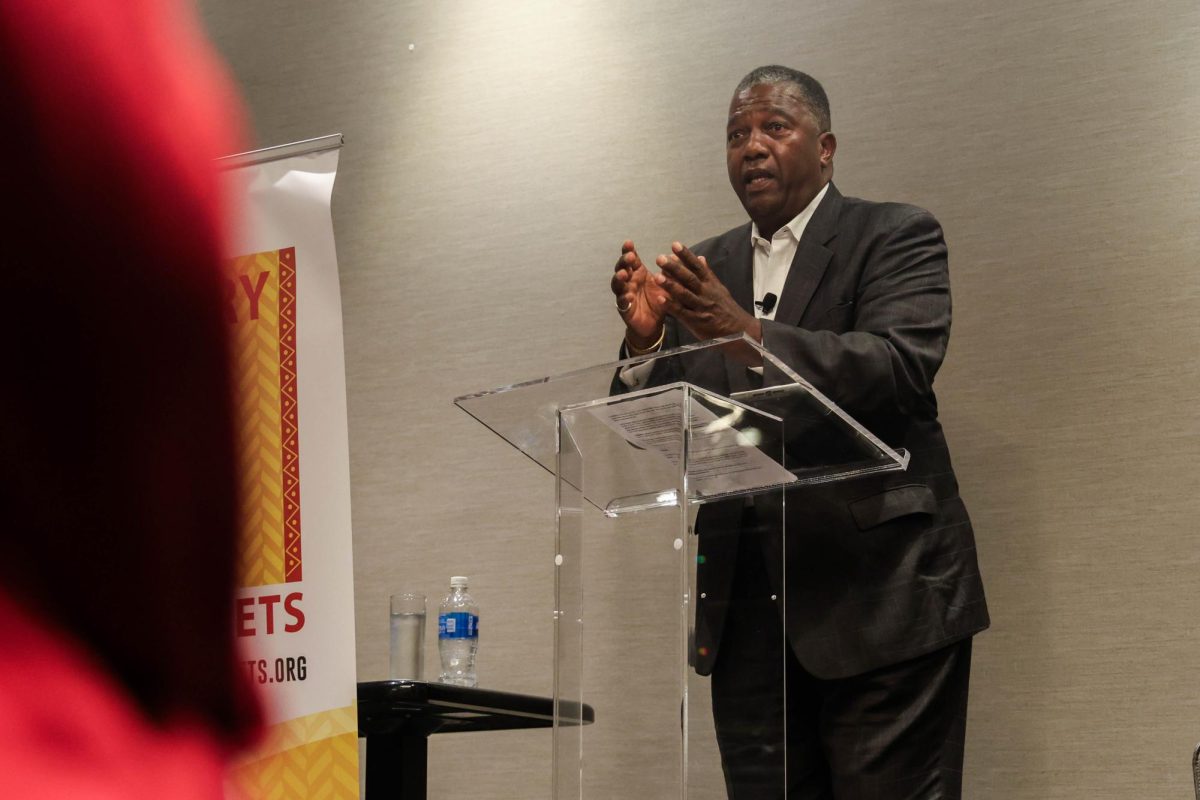
Ahmed and Culpepper faced off in a debate Oct. 16, making their pitch for city councilor.
The two candidates tackled topics ranging from the local economy to trust in leadership, but voters said what’s important is visibility and accessibility to those in leadership.
“When I was canvassing, a lot of constituents were saying, ‘I don’t know who my councilor is, I haven’t seen my councilor,’” said Tchad Cort, a former candidate in the city councilor election. “Visibility, accessibility, transparency are key. You have to be out here.”

The debate topics mirrored many voters’ biggest concerns: revitalizing District 7, ensuring access to healthy food and supporting schools. But one issue that residents felt wasn’t explored enough was the creation of an office for reparative justice.
“I would love to see an office of reparative justice established,” Cort said. “I know we have some things in place there, but more permanent things.”
The City of Boston created a reparations task force in 2022 aimed at “healing racial inequities for descendants of slavery,” according to its website. The task force is currently in its first of three phases, which includes working with researchers to study the impact of slavery on the city and descendants, with no specific timeline for when its recommendations will be announced.
Residents also emphasized the importance of voting and participating in local elections.
“This [councilor] will represent our small building block of the democracy,” said Carol Blair, who has been a resident of District 7 for nearly 50 years. “This is where we can have the most influence.”
Voters agree that the most pertinent goal should be creating a sense of community in the district.
“I think that regardless of whoever is elected, we all as citizens have work to do,” Cort said. “So I’m just hoping that the person [who is elected] will work best for us and with us.”
Other voters echoed the same message of unity.
“This district should not have the optics of being divided,” Rollins said. “We’re all in this together. We’re all in the same boat and we all should be looking to work together both ideologically and visually because we’re all being downtrodden and oppressed.”