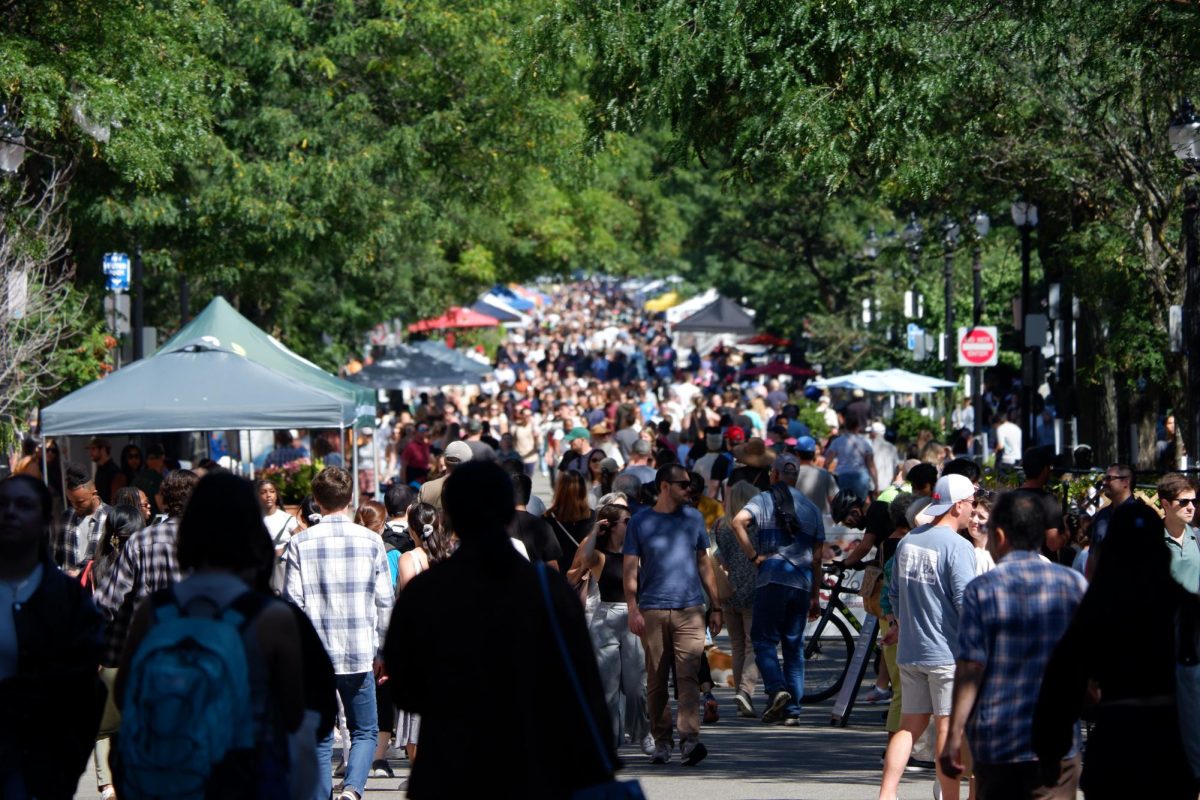
Boston Common is known by residents and tourists alike for the warm sunlight shining on its lush greenery in the summer and to people sledding down the hill near the Soldiers and Sailors Monument in the winter. The Common is more than a large patch of greenery in the city, though: it is the oldest public park in the United States.
Founded in 1634, the Common was originally a farm owned by William Blaxton, one of the first European settlers to arrive in Massachusetts. He sold the land to a group of Puritan settlers, making it a public space.
The Common has evolved since the colonial era (1607-1775) — when the land was used for grazing and public executions — into the green space it is today. Now, it hosts all kinds of events, including leisure activities, protests and celebrations, including Skating with Friends and Skating at Lunch on the Frog Pond, the “No Kings” protests, a Summer Celebration at Brewer Plaza and the Common’s annual Christmas tree lighting.
In the next few years, Boston Common will undergo a major revitalization under what the city is calling the Boston Common Master Plan. The City of Boston is committing $28 million to enhance the space and make it more accessible, including upgrades to the Frog Pond and pavilion, improvements to the park’s functional and operational management and expansion of recreational spaces, such as the Tadpole Playground and athletic fields.
After the Common was renovated and remodeled from a former pasture into a green space with plants and trees, various architecture and statues — including the Parkman Bandstand, the Augustus Saint-Gaudens’ Shaw 54th Regiment Memorial and the Embrace monument — were also added to preserve history and honor past political figures.
The Common also used to hold the notorious Great Elm tree, where people who committed crimes or were accused of witchcraft were executed, before it collapsed during a storm in 1876.
More recently, a partnership between Emerson College and the City of Boston established the Uncommon Corner, which turned an underserved corner of the Common into a space where people can enjoy high-quality entertainment and food services, including the Harpoon Brewery and El Jefe’s Taqueria.
“It’s a great way to see nature and walk around and be around a bunch of happy people,” said Ryan Rawitscher, a consultant at Cloud Strategy and Boston resident who frequents the Common. “We love when there’s fun events, like the Shakespeare in the Park, and we also think that the Uncommon Corner is especially underrepresented and how fun and lively it becomes on the weekend.”
Shakespeare in the Park occurs annually on the Common and entails residents and tourists gathering under the stars on a summer evening to watch family-friendly Shakespearean productions and performances. This year’s production will stage “A Midsummer Night’s Dream.”
For Karen and Donna Smith, two sisters who used to live in Boston in the 1980s, the Common was always a place where they could enjoy being in both the city and nature.
“I like that you can be outside and it’s beautiful, but still see the buildings too,” Karen Smith said.
The Common has a strong history of hosting public protests. Zara Raezer, a tour guide for the Freedom Trail Foundation who cosplays as the first professional writer in the United States, describes the Common as the true embodiment of the First Amendment: it is a place where groups gather to express all kinds of beliefs, regardless of their political affiliation.
“I know I’m not the only tour guide who says that, but the idea that this is the place where everyone is welcome to gather and share their beliefs, and I definitely think a long history of public dissent on Boston Common has to do with that,” Raezer said. “I think you can look back as early as the American Revolutionary War, you start seeing these little spurts of that public protest and energy and you really see it ramping up in the 20th and 21st century.”
In recent months, the Common has been host to hundreds of protests, including protests against immigration enforcement, pro-Palestine protests and the Hands-Off Massachusetts rally.
Raezer looks forward to seeing the Common continue to evolve and serve as a place where people can relax and learn more about its rich history.
“I’m excited to just continue to be a part of that story and be able to share that history,” Raezer said. “I think that Boston is unique in the United States in our historic preservation, and I also think we’re unique in the way that we do a great job in trying to make spaces usable and beautiful to the people that live here. So I’m excited to see this becoming the place that even more people on the weekend are just going to come and enjoy it.”