Several incidents of violence around the Boston campus at the end of March and early April have left many students on edge.
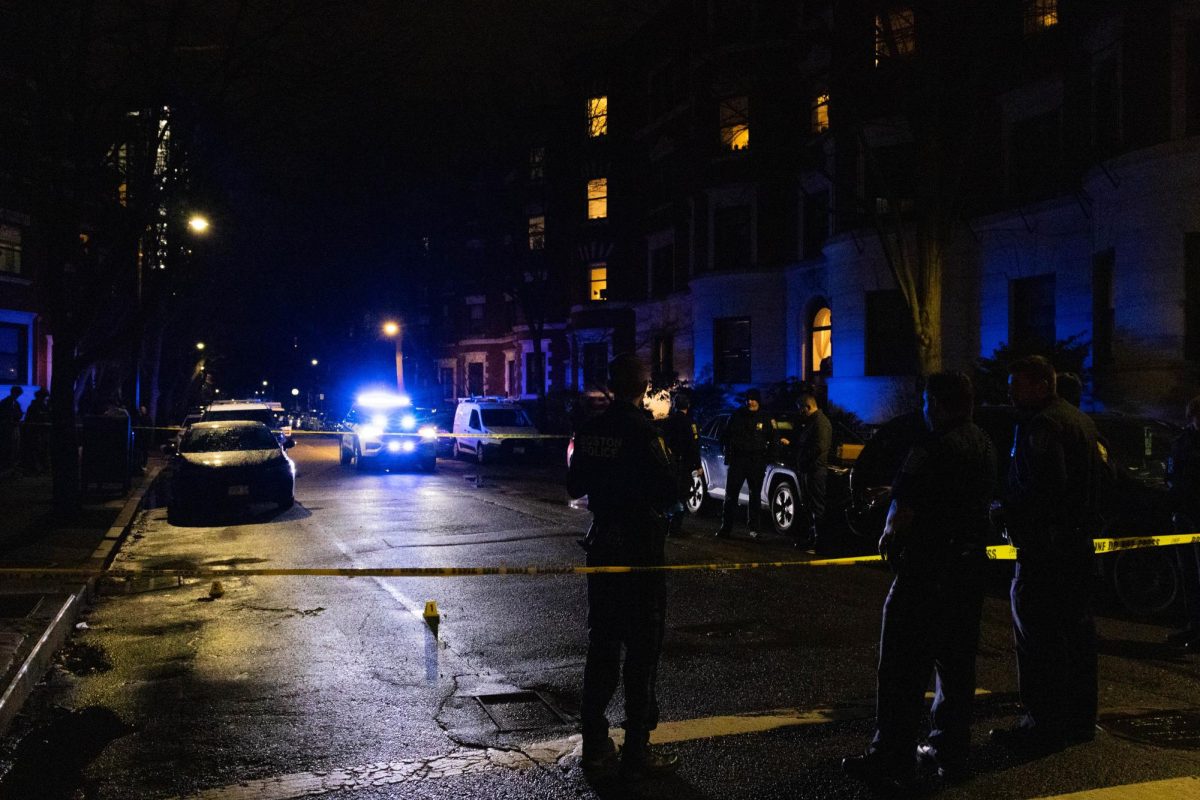
On March 27, an individual stabbed a student outside Marino Recreation Center. In the morning of April 1, a person unaffiliated with Northeastern was stabbed near 291 Huntington Ave. and wandered into East Village, or EV, seeking aid. Later that day, police received reports of gunfire on Gainsborough Street near Stetson East and Smith Hall, though there were no victims reported.
As of publication, police have apprehended the suspect in the incident near EV, while the Marino stabbing is still under investigation, university-run media outlet Northeastern Global News wrote in an article published April 2.
As details emerged, students voiced concerns about their safety and the university’s response, calling for faster and clearer communication. Many expressed frustration with how Northeastern handled the incidents, saying they turned to social media and peers to fill information gaps left by delayed and sparse official alerts.
The university sent email alerts to students notifying them of the stabbings as the situations were evolving. When a student was stabbed outside Marino, the university sent an email alert that morning — Saturday, March 28 at 12:43 a.m. — saying a student was assaulted outside the center, the suspect had fled the area, the victim was taken to the hospital with non-life-threatening injuries and that NUPD increased patrols. On the day of the EV incident, Northeastern sent three alerts: one around 9 a.m., one at 10:17 a.m. and one at 11:08 a.m. The university did not notify students about the reported gunfire on Gainsborough Street.
Northeastern Global News, or NGN, published an article April 2 including an interview with Northeastern University Police Department Chief Ruben Galindo, who reassured students that “our campus is safe at this time” and “there is no threat or concern.”
“We have 24/7 police patrols on campus and have increased patrols since last Friday for visibility and deterrence,” Galindo told NGN.
Under the Clery Act, colleges and universities are required to evaluate any serious or ongoing threats to the campus community and determine if a “timely warning needs to be issued to all staff and students,” according to the Clery Center. If there is an immediate safety or health risk to the campus community, campus officials “may issue an emergency notification.”

In light of these events, many students took to social media to voice their fears. Some students turned to online platforms, namely Sidechat, an anonymous social media app also known as Yik Yak, to disseminate information.
“I hear about [events like this] more from my friends and on Yik Yak than anything,” said Thy Luong, a first-year behavioral neuroscience major.
Some students called for the university to take more action following the stabbing incident.
“I feel like [Northeastern] should have been more comforting. They should have given us time to process these events and maybe time off for the students who actually saw it,” said Benjamin Lobo, a first-year business administration major. Lobo said he found out about the stabbing near EV through a friend’s Snapchat story.
Northeastern media relations did not respond to a request for comment about students’ safety concerns after the stabbings.
Kaile Tom, a third-year health science major, said she also found out about the stabbing near EV through peers before receiving any official confirmation from Northeastern.
“I found out way before any emails were sent out about the situation, which is a little bit concerning, because a lot of rumors can spread that way instead of having the university themselves confirm all the information,” Tom said.
Emily Li, a first-year politics, philosophy, and economics and business administration combined major, said she was surprised when she saw police presence near EV as the situation unfolded Wednesday morning.
“[Northeastern] could work on being quicker,” Li said. “But also, [the EV stabbing] happened really early in the morning. I know a lot of people have 8 a.m. classes, so I do feel like they could have shut down that area of campus or canceled classes during that part.”
Charlie Hauck, a first-year political science and business administration combined major, found out about the stabbing near EV when he woke up to a text from his mother asking if he was safe. Others encountered the news through social media posts.
“In the email they said it wasn’t on Northeastern campus, but in reality, it was on a road right there,” Hauck said. “They need to be more clear with students in addressing problems rather than brushing them away.”
In the email alert to students around 11:08 a.m. April 1, the university stated that the stabbing incident near EV “did not take place on Northeastern’s campus” and advised students to avoid the area while police responded. The stabbing incident took place 0.1 miles away from EV, according to a Huntington News analysis using Google Maps.
College campus safety has been in the spotlight since the December mass shooting at Brown University. A survey conducted by The News in March found that 84.4% of Northeastern students are unfamiliar with the university’s active shooter protocols, but over 75% of respondents said they feel safe on campus.
The News has reported on campus safety issues for decades, reflecting the concerns that arise when a university campus is in an urban setting. For instance, in 1978, the murder of Northeastern professor F. Andre Favat sparked outrage across the community and increased scrutiny about campus security.
Beyond communication concerns, several students said the incidents have contributed to a general sense of unease around campus.
Some students feel that the university isn’t taking enough accountability for the assaults and expressed frustration with how the location of the EV stabbing incident was characterized. Vraj Patel, a fourth-year political science and economics combined major, felt the university could have handled the situation differently.
“At the bare minimum, they should have canceled classes,” Patel said.
While Patel noted that he generally feels safer on campus than he does off campus, he said there is still room for improvement, particularly with security presence on campus.
In the aftermath of the incidents, students around campus are focusing on taking precautions. In its alerts, the university advised students to plan their walking routes, avoid unfamiliar streets and pay attention to their surroundings by cutting out distractions such as listening to music or texting.
“I am going to be more aware of my surroundings and maybe walk without my AirPods so I can hear everything going on around me,” Tom said.
Patel, who lives off campus, also plans to increase his vigilance.
“I’m not going to walk around alone at night,” Patel said. “And [I’ll] be more aware of my surroundings when I’m walking around because I feel like I’m not good at that. I’m always on my phone when I’m walking, so I’m going to keep that in mind for the future.”
Editor’s note: This article was updated on Saturday, April 4 at 4:00 p.m. to add context about the Clery Act.