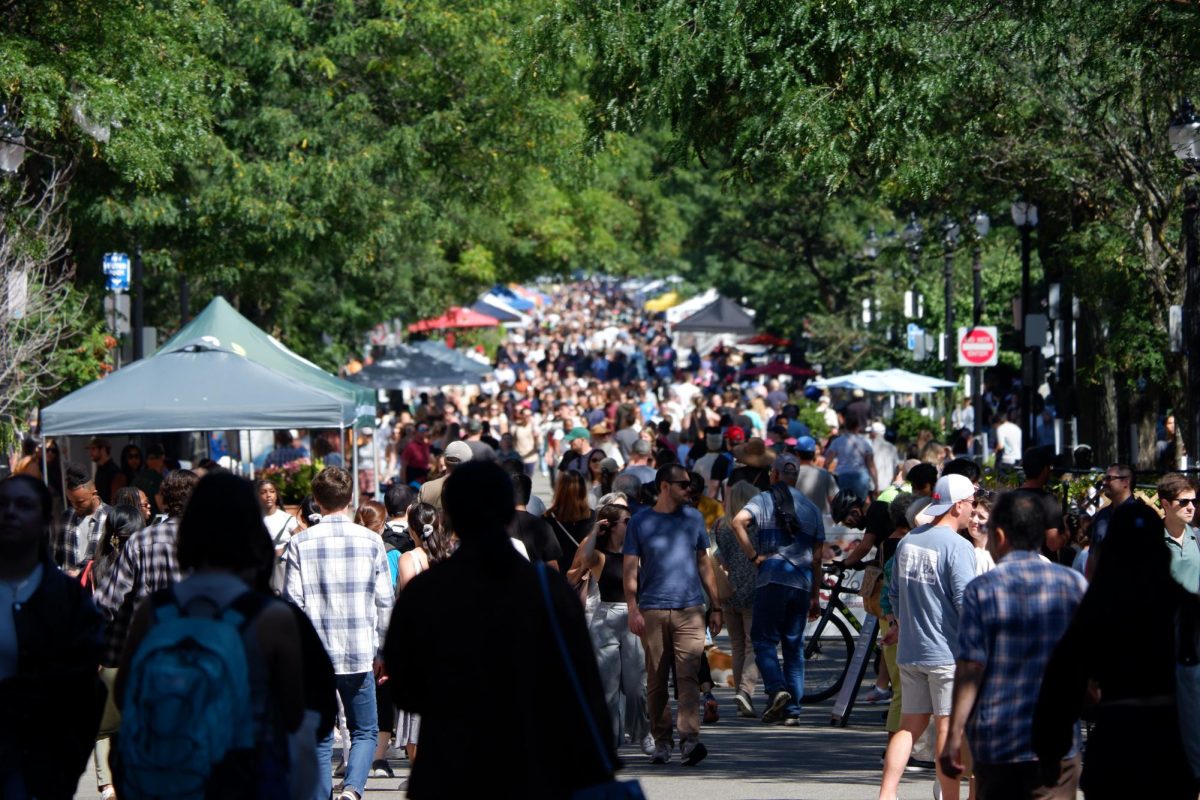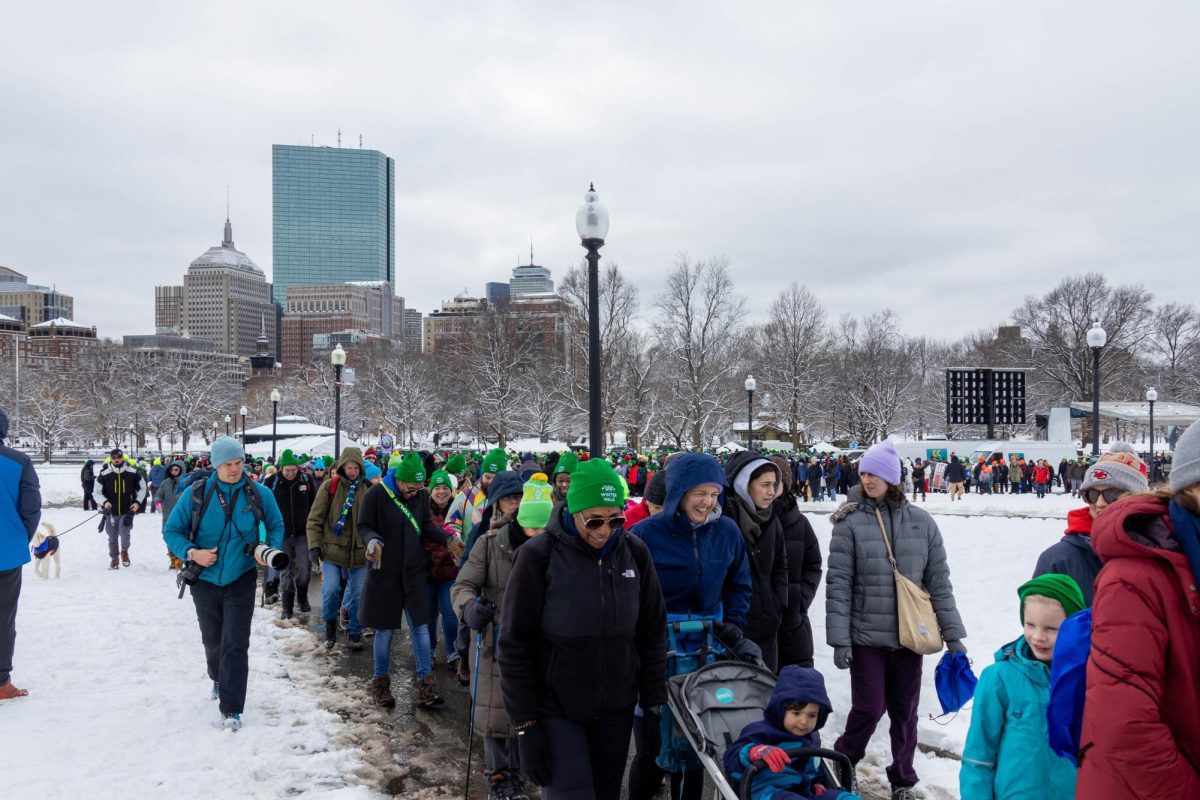
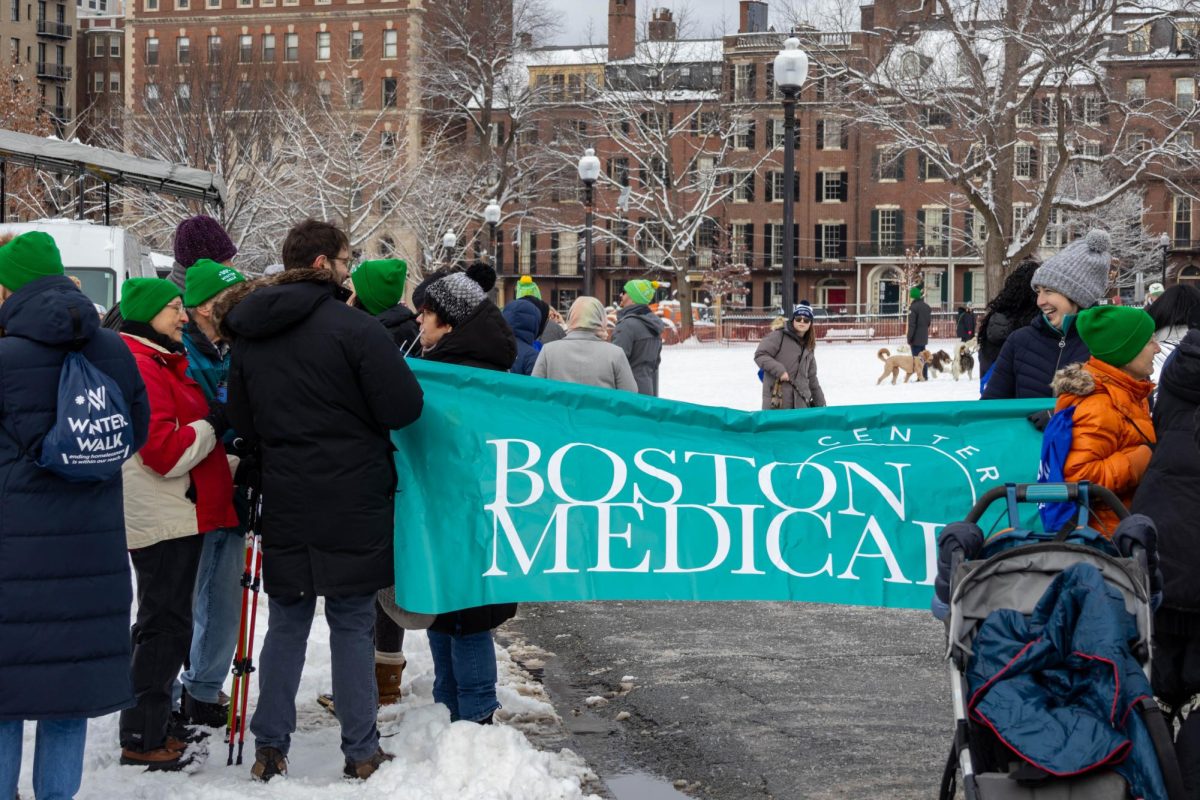
More than 3,000 people gathered in Boston Common March 22 for the city’s 10th annual Winter Walk to End Homelessness.
Donning their signature matching blue beanies, which have become an event staple, participants walked a mile loop around the park before gathering to drink coffee, eat pastries and celebrate community.
The Winter Walk is an annual fundraiser for local organizations working to end homelessness in the Boston area. Co-founded in 2016 by tech entrepreneur Paul English with Ari Barbanell and Robyn Glaser, the event has grown from a modest gathering into one of the city’s largest community events. The Winter Walk raises hundreds of thousands of dollars each year for partners including the Pine Street Inn, Boston Health Care for the Homeless, St. Francis House and more than 20 other nonprofit service providers.
But for English, the morning was about more than fundraising; it was about the rare sight of an entire community showing up in one place.
“These are all the programs that spend day in and day out taking care of people and joining in a community,” English said, addressing the crowd. “And then on this day, we get to all just walk together with everybody we know and love and care about. It never happens like this.”
The walk is typically held in February to remind participants of the harsh conditions unhoused people face during Boston’s coldest months, but was rescheduled to March this year due to back-to-back blizzards. For Boston’s estimated 5,500 homeless people, these blizzards represented more than an inconvenience. Freezing temperatures can be deadly for people living without adequate housing, and cold-related deaths among the city’s unhoused population are reported nearly every winter, adding urgency to the Walk’s mission.
Among the thousands walking was Boston University senior lecturer Brandy Barents and several students enrolled in her service-learning course.
“I thought it would be a cool research class for people to not only become aware, but think about the possibilities for how we can really help in our culture and society,” Barents said. “Winter Walk was an essential way I thought about this class happening.”
Darren Donovan, a first year Mechanical Engineering major at BU enrolled in the course, said that growing up in the Boston area gave him a personal connection to the cause.
“[Homelessness is] a problem that I feel like isn’t talked about enough, so I wanted to learn and give perspective on what’s going on in my city and learn how it’s affecting people,” Donovan said.
For Marler Verona, a first year Biology major enrolled in the course, the walk offered something beyond the classroom.
“I think it gives me a bigger view on the city, and it makes me understand more of what my home is now and what my home is here,” Verona said. “Not only has it been experienced for me to learn more about the city, but just to feel more comfortable in the home that I’m living in as well.”
Behind the scenes, the walk’s success is the product of year-round planning and relationship-building. Deborah Collins, the chief executive officer of Brookview House, a Boston nonprofit that serves homeless and at-risk families, said that reflection and strategy for next year begin almost as soon as one Walk ends.
“Throughout the course of the year, we work with the Winter Walk folks,” Collins said. “We’ll have an opportunity to come together and talk about some of the things that worked, or things that can be improved upon. And then from there, we help them plan for the next year.”
Collins described the behind-the-scenes work, which includes discussions about funding strategy, social media outreach and mobilizing both volunteers and participants.
As the walk enters its second decade, the organization is looking to grow beyond Boston. It has already expanded to New York City, Chicago, Philadelphia and Tallahassee, partnering with the cities’ local nonprofit organizations. Winter Walk organizers say they are actively seeking new host cities and community partners to bring the Walk to additional locations in 2027, with the goal of building a national movement.
English, before allowing 3,000 eager walkers to begin their lap, signed off by emphasizing what keeps the walk grounded: the local community.
“This is really a chance for us to just be a community, and realize that we’re all just as good as we are together,” he said. “Who’s ready to walk?”