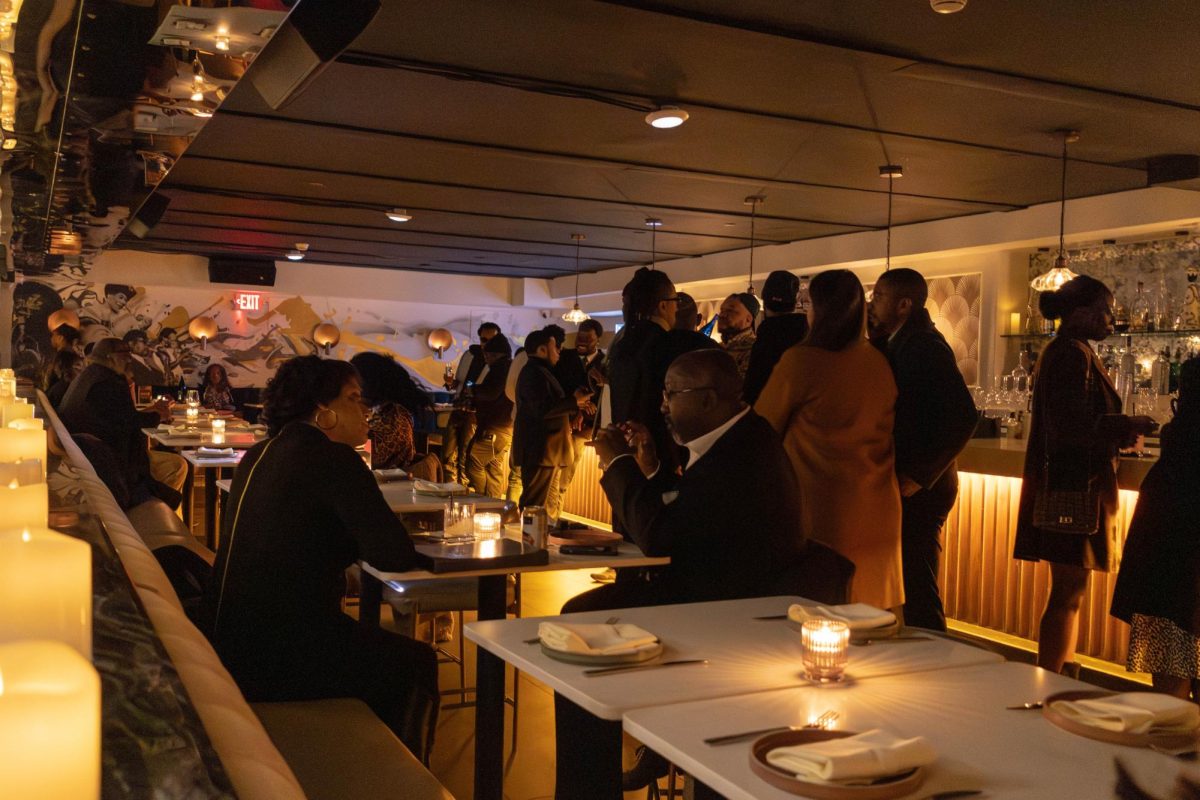
More than 50 elected officials, community leaders and high school and college students gathered Feb. 27 at Hue Boston, a Black-owned restaurant in Back Bay, to celebrate the 100th anniversary of Black History Month.
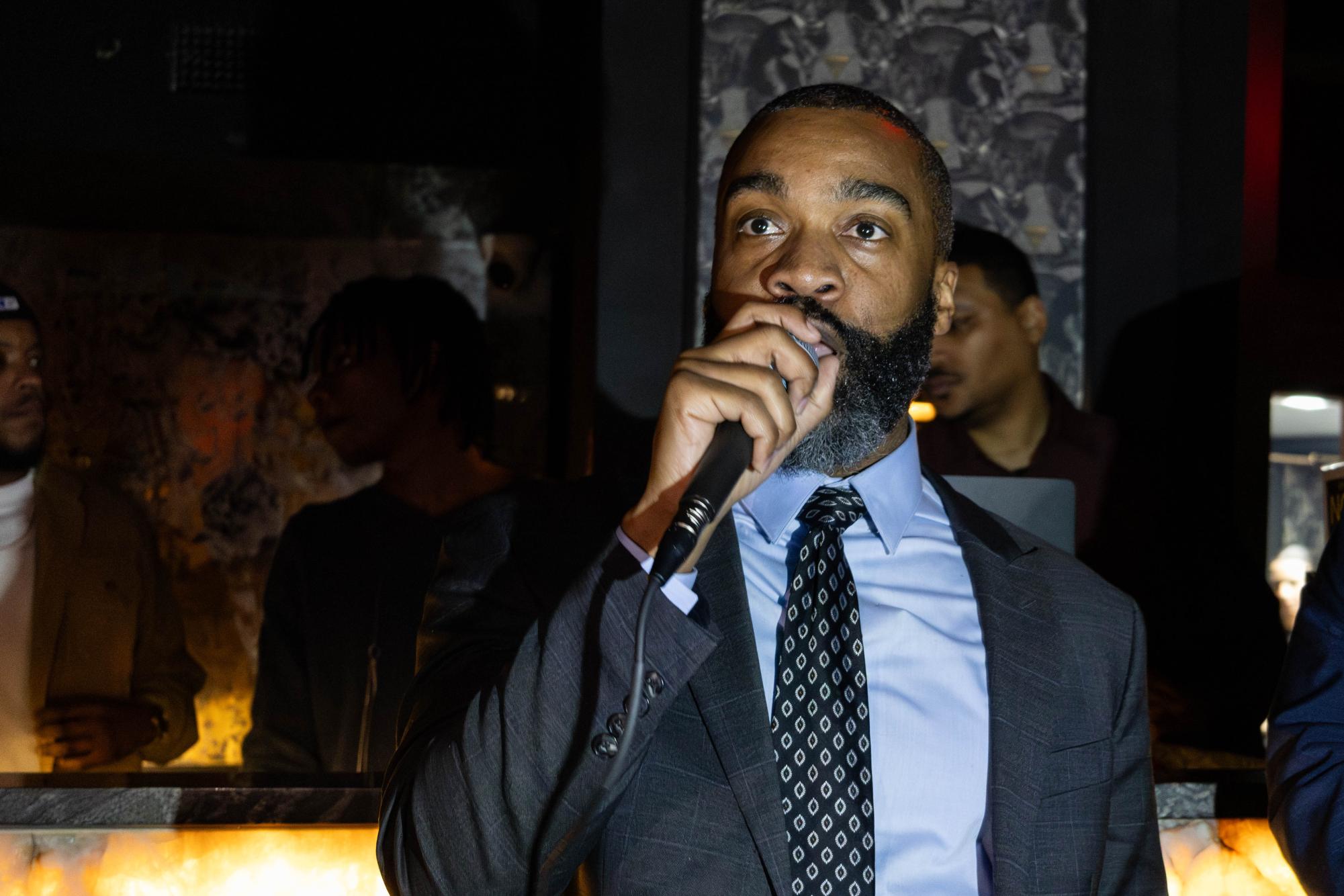
The City of Boston’s Office of Black Male Advancement hosted the event, which included refreshments, live music, networking opportunities and speeches by elected officials. District 7 City Councilor Miniard Culpepper, Executive Director of the Office of Black Male Advancement Frank Farrow and former District 7 City Councilor Tito Jackson, among others, spoke.
District Attorney Kevin Hayden and District 4 City Councilor Brian Worrell also led chants, including “I’m Black and I’m proud!” and “Keep hope alive,” a phrase honoring landmark civil rights activist Jesse Jackson, who passed away Feb. 16.
“Tonight is more than a celebration,” Farrow said in a speech. “It’s a reminder of where we’ve been, the shoulders we stand on and the responsibility we carry going forward. Tonight, we honor those who paved the way.”
Black History Month started in 1926 after historian and “Father of Black history” Carter G. Hudson initiated Negro History Week, which sought to highlight the achievements of African Americans and commemorate past hurdles. The weeklong celebration happened in the second week of February to coincide with the birthdays of 16th U.S. President Abraham Lincoln and abolitionist movement leader Frederick Douglass before becoming a month-long celebration.
The celebration was an opportunity to revel in the success of the past civil rights movement that ended segregation and Jim Crow laws while establishing opportunities for underrepresented communities to thrive.
West Ward, a self-employed social media marketing and community engagement strategist and attendee, shared his gratitude for the chance to meet new people who are also thriving in different industries.
“I’m really appreciative of all the leaders that put this together,” Ward said. “It’s very important for us to come together, because in the past 30, 40 years, just coming out of segregation and Jim Crow laws and coming from a time where we weren’t even allowed to come together like this and unify, now we’re able to grow and prosper and go into different lanes and creative lanes as well.”
Although speakers emphasized there is still work to be done, the celebration also highlighted the positive achievements of communities of color over the last few months, years and decades.
“With all the things that are going on in the world that will bring you down, an event like this will tell you that there’s a lot of positive things going on,” said Sandra Manassa, an operations officer at the Josiah Quincy Upper School who attended the celebration. “I think this is an example of what people can do and that we need to keep coming together to make sure that we progress.”
To Joe Rowell, a senior manager of recruitment and policy at Power Corp Boston, the celebration is a reminder of what Black history means to him and the lineage of survivors in slavery and boycott that he proudly represents.
“It’s the essence of who I am,” Rowell said. “I am the history that they talk about. I’m proud to be a part of the legacy.”
Speakers urged residents, students and leaders alike to continue showing up in their communities, whether that be in school committee hearings or City Council meetings. They also highlighted the city’s plan to vote on a $4.8 billion budget for the 2026 fiscal year, with funding going toward education, housing and homeownership, transportation and security.
And for Rufus Faulk, co-owner of The MIX Boston, a restaurant and lounge in Dorchester, Black history transcends February.
“Black History Month is something that’s not something that can be contained in a month. It has to be something that you live every day,” Faulk said. “You are living Black history. You are the embodiment of Black history, and the only way Black history is going to continue is if you continue to be the best versions of yourself and pass it along to the generation behind you.”