After four violent incidents near Northeastern’s Boston campus at the end of March and early April, students are calling on the university to improve its emergency notification system, claiming the administration did not adequately inform the community as the events unfolded.
In three of four incidents, the Northeastern University Police Department, or NUPD, released NU Alerts, the university’s emergency notification system, as required by the Clery Act.
Following the stabbing of a Northeastern student outside of Marino Recreation Center at approximately 10:30 p.m. March 27, the university sent an NU Alert over two hours later, at 12:43 a.m.
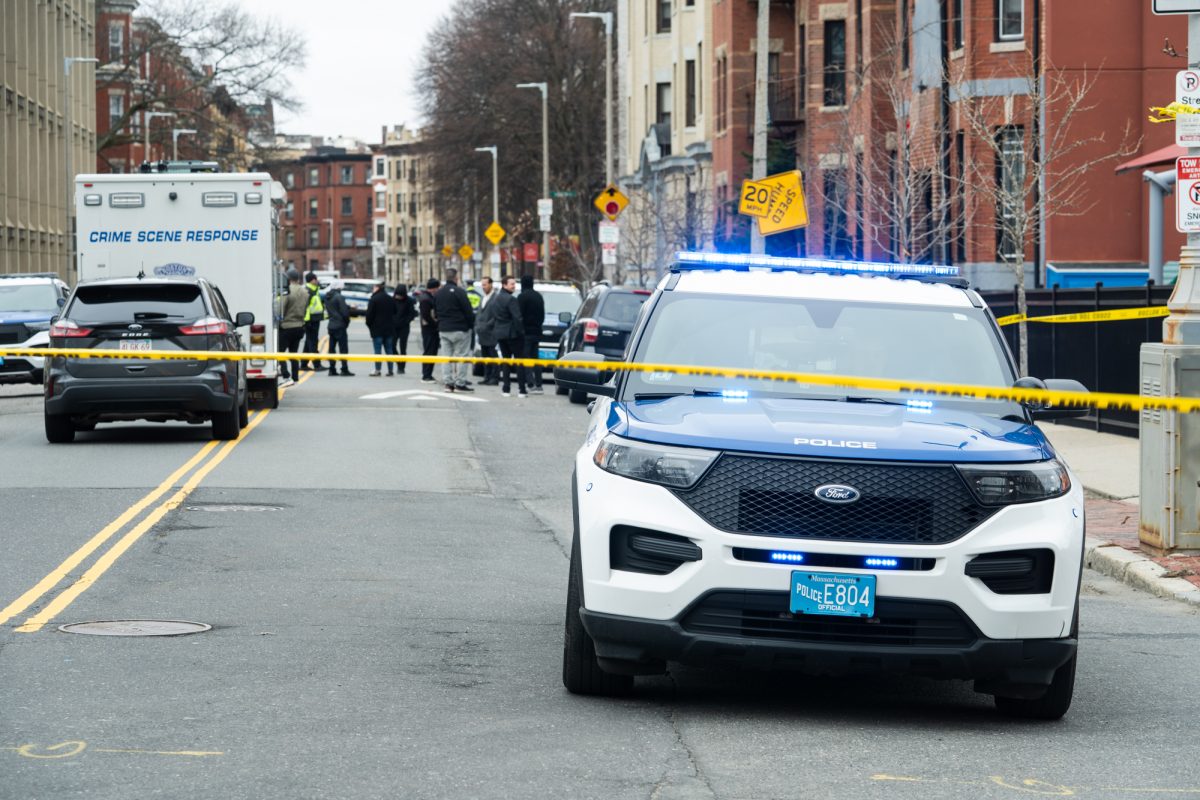
On April 1, NUPD sent out an NU Alert at 9 a.m. alerting the community of police activity near EV following a stabbing at the corner of Huntington Avenue and Gainsborough Street. An all-clear was sent out at 10:14 a.m. that same day. The alert referenced an incident that occurred around 8:30 a.m.
Northeastern police did not send out NU Alerts about the shots fired on Gainsborough after an NUPD assessment of the scene established there was “no imminent or continuing threat to the campus,” NUPD Chief Ruben Galindo said in an April 2 interview with Northeastern Global News, the university-run media outlet.
Northeastern police sent one alert regarding the April 4 shooting at 11:56 a.m. reporting police activity on Hemenway Street and noting there was no active threat to campus.
Jane López, a part-time lecturer at Northeastern and a civil rights and education law attorney of over 30 years, said the Clery Act requires universities that receive federal funding to “maintain and disclose information about crime on or near campuses.” That includes reporting campus crime statistics as well as providing timely warning about threats.
The law, she explained, was created to ensure that students and their families can “make informed decisions based on campus safety.” George H.W. Bush signed the bill into law in response to the 1986 rape and murder of 19-year-old Jeanne Clery in her Lehigh University dorm room. Following her murder, Clery’s parents discovered that Lehigh had not disclosed prior crimes on campus, leaving students and their families unaware of potential danger.
“Public property, sidewalks, streets, roads adjacent and accessible from the campus” are all covered by the Clery Act, López said, “as well as certain off-campus properties controlled by the university or recognized by student organizations, such as fraternity houses. However, incidents on private property may not require alerts unless the university policy goes beyond federal requirements.”
Northeastern declined to comment regarding Clery Act compliance and its specific regulations regarding emergency alerts.
On the night of April 1, Berklee College of Music sent its students an emergency alert regarding shots fired on Gainsborough Street, but Northeastern didn’t, despite the incident occurring nearby a residence hall. López did not comment on whether NU Alerts were in compliance with the Clery Act.
In the April 2 interview, Galindo assured community members that “campus is safe at this time,” emphasizing that the events were “random acts of violence.”
However, students said often their first notification of recent events was through word of mouth, a text from a friend, an Instagram post or a Sidechat notification.
“The other day with the [shooting on Hemenway], that came out kind of late and I feel like there wasn’t enough information to really inform people what was going on other than just saying ‘police activity,’” said Ashley Zhang, a second-year environmental studies and international affairs combined major.
This absence of timely alerts left students uneasy about the crimes and frustrated with the university’s response.
“I feel like there’s not enough information out when it needs to go out. It’s really scary,” Zhang said. “It kind of feels surreal that so many events have happened.”
López said emergency notifications must be sent immediately when there is a “confirmed immediate threat to the health or safety of people on campus, such as an active shooter or fire.” Timely warnings are issued when “the immediate danger has passed, but the incident poses a serious or ongoing threat.”
Brooklynn Roulette, a third-year business administration major, said she believes communication from NUPD should be more immediate. Roulette, who lives close to where the April 4 Hemenway Street shooting occurred, feels delays in alerts can put students at risk.
“I think that [NUPD] could do a better job communicating to students what’s happening, especially in the moment. I could have been near that area — it was just luck that I wasn’t,” she said.